Showing posts with label short stories. Show all posts

Wednesday, March 10, 2010

The Beijing of Possibilities by Jonathan Tel

Format: Trade Paperback, 208 pages
Publisher: Other Press
ISBN: 978-1-59051-326-2 (1-59051-326-6)

Pub Date: June 30, 2009
Price: $18.95

In recent years, there has been no shortage of expat-written nonfiction books set in Beijing, but fiction in the same category is hard to come by. That is why Jonathan Tel's new story collection, The Beijing of Possibilities, caught my eye the moment I saw it on the Commonwealth Writers' Prize 2010 short list (thanks, Leela Soma and Rob) .

It's a slim little volume with a most intriguing cover art of a pretty Chinese lady with what appears to be sightless eyes. When friends and I first saw the cover design we had a nice discussion of what that might signify...was she looking "inside" herself or was she deliberately refusing to "see" that which is obvious to everyone else? Don't you just love cover art that intrigues? I did some research on the art and found out it has been taken from the Reed Darmon collection. Reed Darmon is the person responsible for the "Made in China" graphics book and you can learn more about it here.


To come back to the stories...all twelve invoke Beijing in some way or the other even if the stories themselves vary widely in time period and location.
The most notable aspect of Tel's storytelling is how he recounts modern facts about China but interwoven with Chinese folk tales (and superstitions). The Monkey Legend seems to be his favorite one and the first story of the collection "Year of the Gorilla" begins with the sentence, "It's been a while since the Monkey King set out on his Journey to the West", with "A Journey to the West" being the title of this much-loved legend and folk tale.

Another trait I noticed is his ability to blend old China with the new and no story illustrates that better than "
The Most Beautiful Woman In China.” which links together two thousand years of Chinese history, while being set in Beijing today! One generic character that makes his or her appearance in many of the stories is the 'Chinese migrant' and after reading a lot of topical articles on China I have come to the realization that Beijing, even more than Shanghai, is a mecca for the Chinese people...it is the land of opportunity, the land where dreams come true or as Tel himself describes in the title, it is the land full of possibilities.

"Beijing is the center of the universe. Ask anybody who lives there. “The true Beijinger secretly believes that people living anywhere else have to be, in some sense, kidding.”
—in a foreword by Helan Xiao

One of my favorite migrant characters in this collection is from the title story. Miss Xu is a fisherman's daughter but "foster" mother to the child of a young couple in Beijing. The couple have hired Miss Xu to look after their as-yet-unborn child because they are too busy to care for the child themselves..in ten or twelve years time they'll be ready to take the child to live with them. Unfortunately the child dies before they could hand it over to Miss Xu but because she had been registered in Bejing as a "foster mother" Miss Xu lands herself an unexpected ticket to residency in Beijing which is to most Chinese what an American green card is to refugees!
Ofcourse, being a "hick" from Hainan (a sleepy little fishing village) she was treated as an outcast in Beijing which makes for a very moving story.

Tel also has this ability to infuse his stories with playful plots and language. Amusing, but a little sad too, is "The Book of Auspicious and Inauspicious Dreams" where a young, modern couple, during renovations to their 1960's home, chance upon a rusty tin of souvenirs buried in a wall of their suburban Beijing house. Realizing it must belong to the previous owner they do everything to try to return the tin, only to be met with exclamations of protests from the previous owner who insisted she had never laid eyes on the tin before and that she "loved Chairman Mao more than her own mother and father" which reminds the reader of a turbulent time in China's history
where to be a lover of the arts or to have "western" things meant having a "bourgeois" background which in turn meant being sent to the villages for "reeducation"...something that was a tough and humiliating experience for most intellectuals.

I found a couple of the stories had the overall effect of looking at a subtly distorted mirror but for the most part Tel's prose and plots are smart, entertaining, observant and insightful. It's most definitely a collection to cherish.

Oh, and before I go...I haven't been able to explain the girl on the cover. My best guess is that she is "Little Yu" from the heart warmingly sad story, "The Three Lives of Little Yu" about a childless couple who adopt a little girl whom they call "Yu" only to have her snatched away by the god of death. They adopt a second girl and call her "Yu" too, but the same fate awaits her. When the third girl, again called "Yu" enters their family it is implied that she is a reincarnation of the previous little girls. So could the girl on the cover have been Yu between her lives on earth? I guess I am getting carried away. I'll bet you not even Jonathan Tel thought about his cover as much as I have! :) Oh and whatever you do, don't miss the last story....there's a nice twist in the tale there, a brilliant narrative coup!

Two insightful reviews that might interest you are:

L. Dean Murphy at The Book Reporter


and Happy Reader at Book Closet

And finally, some entertainment! A clip from the pop opera, "Monkey: Journey to the West"

Thursday, February 04, 2010

Luxurious Hearses in "Say You're One of Them" by Uwem Akpan


  • Hardcover: 368 pages

  • Publisher: Little, Brown and Company; 1 edition (Jun 9 2008)

  • Language: English
"Luxurious Hearses" is this ( "Say You're One of Them") collection's fourth and longest story but perhaps its most important. I see it as important because more than any other story I have read here so far, it is this one that brings to life the political, economic and religious strife we read so much about in Africa.

The story, set in Nigeria, illuminates the political situation of Nigeria, the poverty of the people in the Nigerian Delta, the tension between the Muslims in the North and the Christians in the south and what happens when innocent people get caught in between.

After you read this longish nouvella you come away, seeing with new eyes why every now and again Nigeria plunges into Muslim-Christian riots and why, despite all the oil that Nigeria possesses, its people are so poor.


Our protagonist in this story is a 16-year old boy called
Jubril who is forced to head south (towards the Christian part of Nigeria) after riots broke out in his very-Muslim city of Khamfa which is in the north. Ordinarily Jubril may not have had to run away, but when his own Muslim friends turned against him for having a Christian father (whom he had never seen or known) he decided that if he was interested in saving his life it would be prudent for him to leave his town and Muslim mother (and her family) and head south to be reunited with his Christian dad.


The story of his journey from the North to South in the midst of some of the worst religious riots Nigeria has ever seen with a host of wonderfully- colourful characters that are his bus companions; his fears and insecurities about heading to a part of the country that is so alien to him and his perpetual fear of being found out as a Muslim in bus full of Christian refugees is riveting, suspenseful and unputdownable! The reader is as tense as Jubril who is forced to try and blend in with the other people on the bus, a task made much more difficult because his right hand was lopped off when he was arrested for stealing a goat months before.


As always, Akpan's writing holds you spellbound. Most of the story takes place on the bus with occasional flashbacks to Jubrail's life in Khamfa before he had to flee. As a reader you are privy to all the conversations that place on the bus...the fears, egos, anger and other emotions that the passengers bring with them; power dynamics between the well off and the not so well off,the sick and the healthy. Many a time, like Oprah, I got so claustrophobic from being on that bus I had this strong urge to jump off and yet, the writing and the thought of what might happen next kept me glued to the pages.


"An Ex-Mas Feast" was audacious, "The Fattening of Gabon" was downright sad, but "Luxurious Hearses" is gruesome. You're going to need a strong stomach to endure the second half of the novel. Gruesome it might be but at no point do you get the feeling the author is aiming for sensationalism, instead, you come away feeling deeply for the characters, the victims and the persecutors alike, for you come to understand that each man is simply doing all he can to survive.

Since each of the five stories in this book are set in different countries in Africa, you might want to use Howard French's "A Continent for the Taking" or even Richard Dowden's "Africa: Altered States, Ordinary Miracles" as a companion read. I found both very helpful in explaining Africa to me.

Thursday, June 18, 2009

Summer is Short, Read a Story!

HarperPerennial celebrates the short story this summer. Buy some. Read some. Talk some.

Do you have a favorite short story? Tell me which one it is and why you like it so much. Do you write short stories? If it's online, share the link with me. Do you advocate reading short stories? If yes, let us know why. I know a lot of readers who aren't great fans of the short story format, myself included, tell us what we're missing! Do you have a source for good short stories online? Share the link!

I’ve got a copy of Petina Gappah's "An Elegy for Easterly" to give away for the best comment.


Petina Gappah is the voice of Zimbabwe. In this astonishingly powerful debut collection, she dissects with real poignancy the lives of people caught up in a situation over which they have no control, as they deal with spiralling inflation, power cuts and financial hardship - a way of life under Mugabe's regime - and cope with issues common to all people everywhere; failed promises, disappointments and unfulfilled dreams. Compelling, unflinching and tender, "An Elegy for Easterly" is a defining book, and a stunning portrait of a country in chaotic meltdown.

Have a happy summer everyone!

An update:

Now you can all listen to Petina Gappah's interview on NPR. It also features an excerpt from everyone's favorite story, "The Mupandawana Dancing Champion" so you can get a feel for her writing style.

******* My sincere most apologies for taking so long to pick a winner, but with summer here the days tend to fly by so very quickly. There were so many good comments that I decided I had to draw for the giveaway, and the winner is.......... drum roll please............. Lorraine!*************

Lorraine, please write me with your address, so I can mail you out a copy as soon as I can, thank you!

Friday, April 10, 2009

# TEA AND OTHER AYAMA NA TALES by Eleanor Bluestein and a GIVEAWAY!!!!!!!!!!!!!!!!


Publisher: BkMk Press
PubDate: 11/30/2008
ISBN: 9781886157644
Price: $16.95


"Tea and Other Ayama Na Tales" by Eleanor Bluestein is a book of 10 short stories set in a mythical country somewhere in the South-East of Asia. Although Ayama Na is a fictitious land, its characters and their surroundings are vibrantly alive. What the reader gathers quite early on in the book is that Ayama Na used to be a thriving country which was then taken over in a bloody coup. The new tyrants ensured the country became a cultural wasteland by putting to death as many artists, (dancers, playwrights, actors etc.) as they could find. The rest of the people were forcibly taken to labor camps where they toiled day and night in the fields or mines, eventually starving to death. Furthermore, the country was dotted with landmines making it virtually impossible for anyone to escape.

The stories in this book are set in modern-day Ayama Na. The nation is in the process of rebuilding itself emotionally and physically- artists are back at work, American tourists are arriving in the country in droves and the King and Queen have just given birth to an heir - all appears to be good, however, the country is still shackled by poverty, superstition, corruption, tyranny and machismo.

Through these 10 remarkable stories Eleanor B. - winner of the G.S. Sharat Chandra Prize for Short Fiction - has conjured up a wounded country populated by amputees begging in the streets, a pineapple farmer, obnoxious American tourists, an outspoken beauty queen, novice Buddhist monk, a one-legged prostitute with deep red hair and impoverished fisher-folk living in crude houseboats because they can't afford proper houses. Written with a rare sensitivity about ordinary people confronting the anguish of their past while trying to live meaningful lives in the 21st century, the stories in this volume weave a magical web of emotions around the reader. Bluestein is a captivating narrator often using prose so vivid it makes the land breathe...she also also possesses the gift of description and her wonderful use of colors, smells and sounds evoke the full flavor of life in Ayama Na.

In "Tea and Other Ayama Na Tales", Eleanor Bluestein has created for us a country that will not be easily forgotten. At times bewitching and enticing, at times unattractive and charmless, Ayama Na is a nation at a crossroad...which route will it follow? As I read, I was reminded of our visit to Cambodia last year..they are also a nation fighting to throw off the shackles of the past and learning to embrace modernity much to the angst of the traditionalists. I was intrigued enough to ask Eleanor Bluestein if she had Cambodia in mind when she developed Ayama Na...read her interview to see what she says!


**Giveaway** I have a copy here (kind courtesy the author) for one lucky reader- all you have to do is leave a comment and you'll be entered in the draw...good luck!

To order your copy from Small Press Distribution click here, or from Amazon click here

For a brief Q & A session with the author, please go here

Blog Tour Stops:


Wednesday, April 1st: The Bluestocking Society
Monday, April 6th: Bookstack
Wednesday, April 8th: Nerd’s Eye View
Friday, April 10th: Lotus Reads
Monday, April 13th: 8Asians
Wednesday, April 15th: 1979 Semi-finalist…
Friday, April 17th: Ramya’s Bookshelf
Monday, April 20th: Feminist Review
Thursday, April 23rd: Trish’s Reading Nook
Tuesday, April 28th: Medieval Bookworm
Wednesday, April 29th: Savvy Verse and Wit

For more reviews of this, and other fine books, visit TLC Book Tours

April 20,2009

****** I want to congratulate Zibiliee,winner of the giveaway...thanks, all of you, for participating, stick around for there will be more! Zibilee please contact me privately with your mailing address, thank you!**********


Thursday, March 26, 2009

In Other Rooms, Other Wonders by Daniyal Mueenuddin


  • Hardcover: 256 pages

  • Publisher: W.W. Norton & Co.; 1 edition (February 1, 2009)

  • Language: English

  • ISBN-10: 0393068005


I first came across Daniyal Mueenuddin's stellar writing when the New Yorker published his story "Nawabdin Electrician" in the July 2008 issue. So intrigued was I with the protagonist Nawabdin, Mueenuddin's lyrical writing and his ability to bring Pakistan and its people into our homes that I hungered to read more from him. Fortunately I didn't have to wait long, in February this year Norton published his first book of short stories titled "In Other Rooms, Other Wonders" and I am happy to say that Mueenuddin is not a one-story wonder...I have enjoyed reading all of the eight stories in this volume, which is saying a lot because I have read other books of short stories and there have always been a couple that I didn't care to finish..not this time!

The central figure of In Other Rooms, Other Wonders is K.K. Harouni, a rich landlord in the Punjab area of Pakistan, though he figures as a protagonist in only one of the eight interconnected stories. The others focus is on peasants, servants, drivers, land managers, privileged Westernized children in an upstairs-downstairs sort of theme

The book opens with "Nawabedin Electrician" but it is "Saleema", the second story which captured my heart and still refuses to let go. In "Saleema", Mueeneddin takes us into the servant quarters of a rich landlord and shows us how even in the kitchen there is a pecking order based on clan and god forbid you come from a clan which is not respected (Saleema came from the Jhulan clan of blackmailers and bootleggars) you are destined to be everybody's doormat. It is sad because Saleema has nothing but sexual favors to offer the menfolk to get ahead and when even that is gone, she is back to square one. What hope is there if you are never allowed to shrug off the heavy mantle of tribe or clan?

Provide, provide, is another excellent story of a small time landlord, Chaudry Jaglani, from Dunyapur, a place along the Indus river. Being an opportunistic man Jaglani manages to increase his lands steadily and become quite active in politics too. However, the story isn't just about him but rather his love (always to be confused with passion) for a servant girl named Zainab and how his love for her ruins them both.

As with the previous stories, I liked how the landscape is such an integral part of the story and enjoyed Mueenuddin's evocative and pastoral descriptions of "peasants bringing back their buffaloes from watering at the end of the day...the heavy bells hanging from the animals' necks making a mournful hollow gonging..." brought back hazy memories of warm summers in the villages of my country!

Perhaps this might be a good time to mention that Mueenuddin is the son of a Pakistani father and American mother and after completing boarding school in Massachusetts, returned to Pakistan at the age of 23 to help his aging father to safeguard some ancestral property that was in danger of being taken over by unscrupulous managers. The seven years he spent on the farm provided the fodder for some of the stories in this book.

"About a Burning Girl" made me wince because it shows you how corruption has come to play such a huge role in the sub-continent. It seems to me that justice can never be had unless you have the mullah to pay for it. This story also reminded me of Mueenuddin's flair for description, especially strong when describing the landscape or one of his characters:

"He wore a battered white skullcap, soiled clothes, a sleeveless sweater and shoes with crepe rubber soles, worn down to one side, which gave each foot a peculiar tilt. The deep lines on his face ran in no rational order, no order corresponding to musculature or to the emotions through which his expressions might pass, but spread from numerous points. The oversized head had settled heavily onto the shoulders, like a sandcastle on the beach, after the sea has run in over it." pg 106

"Our Lady of Paris", "Lily" and "A Spoiled Man" focus on urban Pakistan and while they are captivating in their own way, I preferred the stories set in rural Pakistan. Big cities don't lack for quirky tales or complex characters, but small towns and villages feel more accessible, the characters more colourful, the stories richer.

You can read some of Daniyal Mueenuddin's stories on the web...here are the links:

Nawabdin Electrician

In Other Rooms Other Wonders


A Spoiled Man


Wednesday, May 21, 2008

Genghis Khan and the Making of the Modern World, Mongol and "Idol Lover and other stories from Pakistan"


# Category: History - Asia; Biography & Autobiography - Historical

# Format:
Hardcover, 352 pages


# On Sale: March 16, 2004

# Price:
$25.95


Barbaric! savage! cruel! Those are the first, and probably only, adjectives that come to mind when I think of the Genghis Khan of my school history books.

Indeed, perhaps he was all of those, but for someone who had never been to school and belonged to an outcast family, to have conquered land twice that of Alexander the Great, he had to have had qualities of a leader, had to have been able to inspire loyalty, and here to make that case for him is a book and a movie - Jack Weatherford's revisionist history of Genghis Khan's empire titled
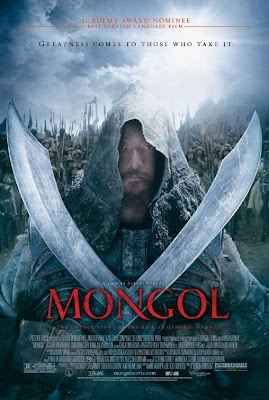
'Genghis Khan and the Making of the Modern World" and Sergei Bodrov's Oscar- nominated movie "Mongol" which will have its North American release on 06June.


The movie essentially covers The Khan's formative years. These are important years because it can be argued that it was the adversities faced in his childhood (the killing of his father at enemy's hands when he was 9; having to live in dire poverty and as an outcast with his mother and siblings in an isolated part of the Steppes (because a widow with children was of no use to the clan); being forced into slavery etc. that made Genghis Khan the determined, fearless and resourceful warrior that be became.


The movie ends with The Khan having defeated all of the Mongolian tribes to become the Chief Warlord, but in some ways, Genghis Khan's story is only just beginning. To read about how this Mongol warlord and his family took over the world it is essential to pick up Jack Weatherford's beautifully written and immensely readable, "Genghis Khan and the Making of the Modern World" which shows Khan as a firm, cruel at times, but progressive ruler. He abolished the caste system that existed in the Mongolia of his childhood, the sale of women, torture and established free trade, international law. He also promoted literacy and championed social/religious tolerance (although the Mongols themselves were animists, many took Buddhist and Christian wives)

One of the most intriguing facts to have come out of Weatherford's book is that Genghis Khan was a spiritual man and never embarked on a conquest without first getting the blessings of the Lord of the Mountains.
Genghis Khan dies in the first half of the book but Weatherford goes on to tell us how his descendants went on to conquer Russia, Iran, China and Europe. All in all, this is a rollicking good read. I have been so wrapped up in this genius of a book - waking up to it, going to bed with it - I will find it quite hard to replace Genghis Khan!

For a great review and a wonderful write-up on revisionist history do visit Id's blog here

Also discovered some wonderful Pakistani authors this month...

"The Idol Lover and Other Stories from Pakistan" by Moazzam Sheikh is a slim little book but let that not fool you for these original and fresh stories pack a punch! The book is divided into two parts, the first is group of stories set in the continent of Asia and the other takes you to San Francisco.

"Monsoon Rains", set in Pakistan was probably my most favorite story in the book - what is it about the monsoon that makes you realize your loneliness like no other season? Is it the incessant rain dropping like heavy tear drops against the window panes? Is it the smell of the earth - fragrant like a woman's perfume? Or is it just that it keeps people indoors and out of circulation? Whatever it may be, in "Monsoon Rains" the loneliness, the hopelessness that the protagonist feels is palpable, evoking a deep sympathy, tinged with repugnance for how he goes about trying to fill his empty days.

Another memorable story was "The Cow", set in the years of the British Raj in which Sheikh beautifully describes an unlikely friendship between two boys - one, the son of an Indian caretaker of a Bungalow (house) and the other, the son of the British government official that occupied it.

"Kissing the Holy Land" features in part two of the book and is the story of a young man from Pakistan on his first visit to the USA.
The story is set in New York airport as the protagonist waits to transit to San Fransisco. Writing with poignancy and wit, Sheikh touches upon several tender and moving moments through the story making it one you want to go back and read again.

I am still reading the book hence an incomplete review. If you wish to read a longer review please go to the one at Desi Lit.

The Idol Lover is published by Ithurial's Spear and this is what the publishers say about the book:

THE IDOL LOVER AND OTHER STORIES OF PAKISTAN.
Short stories by Moazzam Sheikh. These sexually-charged tales unfold against a backdrop of colonization and ethnic tensions in Pakistan and the Middle East, and they also explore the immigrant's dilemma in the United States. Sheikh "maps the ways in which South Asian identities cohere and threaten to disintegrate at the contradictory intersections of memory, desire, connection, and exploitation... Sheikh's voice too, is unique, bringing to the English short story the flavor and verve of the Urdu/Hindi tradition"--A. Chakladar.

I mentioned having discovered other authors from Pakistan and they are:

A Case of Exploding Mangoes by Mohammed Hanif.


The Making Of Mr. Hai's Daughter : A Memoir by Yasmin Hai

I haven't read either one yet, but they are both on my "to be read quickly" list!