Friday, March 31, 2006

Hyphenated - Canadians

The stamp depicts Laura Secord making her way through the bush during her famous walk to inform the British that the Americans were going to attack Canada.


Indian Minature Painting of Mughal Woman


In July my family and I will celebrate our sixth year in Canada. Often people ask me if I have started to feel Canadian - I'd love to respond in the affirmative because it's almost like your adopted mother anxiously wanting to know if you love her - but the truth is, I feel more Indian than ever!

Don't get me wrong - I love my adopted country and I am loyal to it. I am grateful for all the opportunities it has provided me and my children and in return I will give it the best years of my life, but none of that changes who I am inside, for I will always be Indian. But my children, ahhh, that's another story. They are growing up Canadian; they speak perfect, unaccented English, they ski, they have pool parties, they speak French and do all the things Canadian kids do, except, unlike most Canadian kids, they have Indian parents!

So, when Friday comes around they accompany us to the temple. In March, we celebrate Holi (the festival of color) with our friends; they listen to Hindi music at home and watch Hindi movies (not always out of choice, I will admit, but because it is what my husband and I are watching and they are happy to join in); they eat curry and rice almost everyday of the week and best of all, spend every second summer in India. What does that make them? A few years ago saying they were Indian-Canadians would have seemed unpatriotic, but these days it seems everyone is happy to embrace their hyphenated identities, so I say it with pride: my kids are Indian-Canadians!

What sparked this post? An article by Jhumpa Lahiri ( Pulitzer prize winning author of "Interpreter of Maladies" and "Namesake") in the recent issue of Newsweek. She explains with candor and insight what it was like for her to grow up with two identities, working hard all the time to merge them into one and the effect it has had on her life. The last paragraph of the article is particularly poignant.

Wednesday, March 29, 2006

White On Black by Ruben Gallego

Format: Hardcover/176 pages

Published: December 2005 by Harcourt,Inc.

Genre: Personal Memoirs

Subject:
Orphanages and Diseases - Musculoskeletal

Transalated from the Russian by Marian Schwartz


Often, when I don't have a lot of time to read, I will listen to BBC's Radio 4's "Book of the Week". They cover various genres: Non-fiction, memoirs, autobiography, travelogs, humor and history in abridged 15 min segments which run from Monday to Friday. If I like the abridged version well enough I will go on to read the book in its entirety. Ruben Gallego's memoirs, "White on Black" was one such book.

Publisher's Comments:

This is an extraordinary personal testament, the story of one boy's triumph in the face of impossible obstacles. Born with cerebral palsy in Moscow, Ruben Gallego was hidden away in Soviet state institutions by his maternal grandfather, the secretary general of the Spanish Communist Party in the 1960s. Ruben's mother was told the boy was dead. His was a boyhood spent in orphanages, hospitals, and old-age homes, a life of emotional deprivation and loss of human dignity. And yet, there is no self-pity here, no bitterness, only an unfailing regard for the truth. Gallego's story is one of neglect and mistreatment but also of shared small pleasures, of courage, of the power of the human will, and of a child's growing fascination with books and the worlds he finds in them. Winner of the 2003 Russian Booker Prize, White on Black is "one of those rare books one can call revolutionary" (Corriere della Sera, Italy).

Why I liked it:

This could have been a heart-wrenching, gut-tearing story but the author eschews sentimentality - infact, this book is strangely cheerful in many parts. The author explains why in the preface:

"I'm convinced that life and literature have more than enough of the dark side,. That's not what I want. I write about goodness, triumph, joy, and love. ... Each one of my stories is a story of triumph."

He tells his story of moving from one Russian orphanage to another in little vignettes, moving back and forth in time. The sequence may seem a little choppy at times but overall it gives the readers wonderful insights into the Russian children's homes of the '70's where disabilities and handicaps were looked down upon with disdain and loathing rather than with understanding.

Interesting author fact:

Gallego was saved from this fate by a woman whose name has remained a mystery. The author does not reveal her identity in his book or in his many press interviews. After leaving the "old folks" home he attended college, married twice and has two daughters. In 2000, he was reunited with his mother in Prague (again, no one knows the circumstances of their reunion) and now lives in Freiburg, Germany. Today Gallego's health is shaky; however, he says he has no desire to visit Russia, even if his health permitted it.


Ruben Gallego.

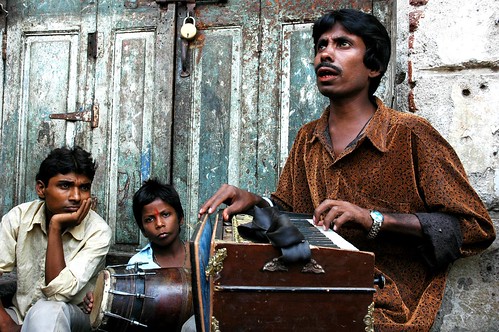
"Dam-damachak", Street Musicians - Pune Maharashtra. INDIA


This image was originally uploaded by lecercle, but I came across it at tiffinbox.org which is a great photography, art and design blog.

I am reproducing it here because something in that picture arrested me. Not sure if it is the hopelessness/sadness I see in these musicians eyes, or if it is plain old fashioned nostalgia - after all, when I was a little girl there was this group of musicians that would visit our street every weekend. They'd sing for about 20 mins or so and although their repertoire consisted mainly of "Bollywood" songs, their rendition of the normally upbeat songs was so melancholic that I would feel a certain sadness enveloping me as they sang. Till today I always associate a harmonium with sad music - not the depressing kind of sad, just "those were days" sad.

This is what lecercle had to say about his photograph and subjects:

"...I took this in the Old Pune, in a neigbhourhood called Budhwar peth, Interestingly it is also to home Pune's musicians and red light district. I found these musicians on the road singing to their hearts content in exchange for alms from pedestrians. I got a feeling of dejection from them, not even a smile at the cleary visible photographer at their heels. Though the setting met the mood."

I do love the setting -the peeling walls, the neglected door with the rusty lock and the paan- stained lips of the singer.

I will occasionally bore you with more pictures that remind me of my childhood. Hope you won't mind!

Monday, March 27, 2006

The Naked Chef


OK, so I'll admit it - I'm not much of a cook. My repertoire consists mainly of "everyday" Indian dishes - a lentil, curry and a vegetable. Nothing fancy. Hubby, on the other hand, rarely cooks, but when he does it's always fancy, fancy, fancy. Anyway, so yesterday I decided I had to "up" my cooking skills a little and what better way to start than with a brand new set of cookware, right? Ofcourse, right!

A girlfriend and I headed for the nearest "Bay" store and I bought a
Jamie Oliver 7-piece "Stainless Steel"cookware set. Made in collaboration with Tefal the pans are just fabulous to look at - I couldn't stop caressing their shiny bright surfaces and giving my arms a good workout with their reassuring weight!

Why Jamie Oliver? Because, have you ever been able to resist a "Naked Chef"? I know I can't! ;) Seriously, I bought it because it was on "special" for that day with 50% off the regular store price! Woo hoo!

And oh, here's the real reason for my post - I also bought a cookbook to go with it!
Bon Appetit, mes amies!

Here's a lovely summer recipe from the Jamie Oliver website. It gets the official "drool" award.


Clementine Chocolate Salad

Serves 4

8 clementines
1 large handful of flaked almonds
10 fresh mint leaves, finely sliced
6 tablespoons caster sugar
4 tablespoons water
seeds from 1 vanilla pod
100g/31/2oz best-quality cooking chocolate (70% cocoa solids), shaved

I love the idea of having a refreshing salad for dessert. You can have some real fun with this sprinkling different nuts, herbs and chocolate over the top.

Method:

Peel the clementines, slice across thinly and remove the pips. Arrange on 4 plates and sprinkle over the almonds and mint. Bring the sugar and water to the boil, add the vanilla seeds and allow to simmer until the liquid becomes a light golden syrup. Try not to touch it too much at this stage. Drizzle the syrup over the clementines and top with the shaved chocolate before serving.

Removing seeds from vanilla pods

1. Score the pods.

2. Scrape the seeds out.

3. Put the unwanted pods in a jar of sugar for delicious flavoured vanilla sugar.

Speaking of recipes do check out Susan in Italy's blog - it's called"Porcini Chronicles: Living and Cooking in Italy"

Friday, March 24, 2006

Cuba on my mind

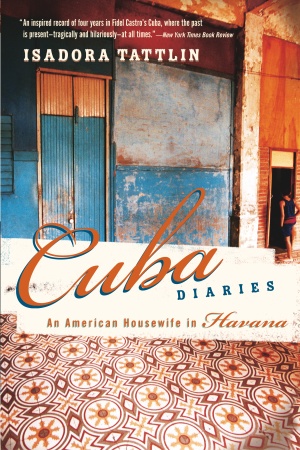
Written by: Isadora Tattlin
Category: Travel; Biography & Autobiography; History - Caribbean & West Indies
Publisher: Broadway
Format: Trade Paperback, 320 pages
Pub Date: May 2003
Price: $12.95


Recommended Reading: Cuba Suspended in Time (Lost Angeles Times)

Interview with the author on NPR


OK, so I'll admit it, Cuba is one of our countrymen's favorite destinations. Almost everyone I know, has either been to Cuba or is planning to go. Yours truly falls in the latter category at the moment. With all this hankering for a trip to Cuba I could be forgiven for imagining that although Cuba is poor and ruled by a dictator, the low crime, free health care, free education, balmy violet waters and lush green tropical paradise had succeeded in lulling the Cuban people into some sort of of a reverie - dreaming of a better life, but not exactly detesting the one they had at the moment. How wrong I was (apparently)! It took Isadora Tattlin's (a pseudonym) book, "Cuba Diaries", a memoir and travelogue of her four years in Cuba, to help me realize my tourist friends and I don't know squat about the real Cuba!

When you live there, like Isadora did, you realize how bad the food shortages are and a shopping list is just a wish list. Most Cubans subsist on rice, beans and squash. Ever since sanctions were imposed on Cuba, getting anything else is next to impossible. There are separate stores or "diplomercados" for foreigners only where sometimes tomatoes may be priced at $17 for 1/4 kilo , but the Cuban people have to head for the state-run-pesos-only bodegas with ration books to buy staples (when available) at subsidized prices. I guess this is why "Tienda de los Novios" or "Store of the Fiances" is such a popular concept. In Cuba, engaged couples are allowed to shop for basic home items at half price at this store between the time of their application for a marriage license and the wedding ceremony! They are also given, following their marriage, two free honeymoon nights in selected hotels. Cubans can use these privileges no matter how many times they may have been married before, and indeed, some locos get married just for those precious sheets, pillow cases and the free honeymoon nights!

She also writes about how most Cubans are moved to thieving or prostititution because their lives are so poor. She describes in detail the colourful "Jinetera" or the young girls in Cuba who prostitute themselves, very often with the permission of their husbands or fathers and become long-time girl friends of Western tourists when they visit Cuba. Often, these jinetera are the soul bread winners for their families and are treated with special affection by the families.

She describes the rundown, near-empty malls and stores (apparently the local Cubans don't have money to use in these stores) and the hopelessly inefficient "paladares" or local restaurants which are usually run out of someone's home. They are not exactly encourged by the government because they compete with tourist hotels, but nor are they completely banned.


As interesting as the book is, after all she hobnobs with Ana Maria Guevera (Che Guevera's step-mother) and has Fidel Castro over to dinner at her house, you cannot help but notice that Tattlin (not her real name) paints a very dismal picture of Cuba and it is apparent from her writing that she cannot wait to leave the place. She comes across a little like a spoiled American princess, who, instead of enjoying a new and novel experience, wishes it was more like "home". Nothing like a homogenized America, is there?


As I arrived at the latter chapters of her book I grew a little ambivalent about her true intentions towards Cuba - can Cuba really be as bad as she makes it out to be? How come she doesn't mention the world famous Cuba National Ballet? The incredibly popular Bueno Vista Social Club for their Latin Jazz? The The beautiful architecture? Cuba's love for baseball and the many baseball stars that Cuba has produced? Why no mention of the free medical education that Cuba offers students from all over the world, the only charge being that they sign a bond stating that the first two years of their careers will be spent helping the less fortunate ?

But, like I said at the start of my review, tourists do not get to see the whole picture, people that live there do. Still, how much would the wife of a diplomat, who lives in the most expensive suburb of Havana and drives expensive Land Cruiser and a Mitsubishi truly get to see of the real Cuba?

This book has left me craving for more of Cuba - the real Cuba- if only it wasn't so elusive.


Cuba is considered a "Museum on Wheels" because it hasn't allowed the import of a single car since the 1960's. Its cars are a vintage-car lover's dream.

Wednesday, March 22, 2006

Children's book under fire


Publishers: Groundwood Books

Pages: 144 pages(Hardcover)/Black and white photographs.

Genre: Non-Fiction for children

Price: $18.95 CDN

Last year, my daughter S. who is in grade 4, was asked by her school to read the book 'Three Wishes: Palestinian and Israeli Children Speak" by Deborah Ellis in order to vote for or against it for the Silver Birch award.

"Three Wishes" is a book about the lives of Palestinian and Israeli children and I remember S. being totally captivated and immensely moved by it. Best of all, she gained such an understanding of this complex international issue . So imagine my surprise when I find out today that the Toronto District School Board has withdrawn the book from library shelves and restricted access to students in Grade 7 or higher.

School boards in York Region, Niagra, Ottawa and Essex County have also either refused to stock the book, restricted access or discouraged its use because some of the Palestinians the author interviewed support terrorism. While it is true that some of the Palestinian children express support for suicide bombings, for instance, 12-year-old Wafa writes: "Killing an Israeli will make me feel glad ... I understand the suicide bombers." But as the National Post points out, if this all-too-prevalent Arab view weren't reflected, "Three Wishes" would be fiction.

S. also liked how Ellis described the creation of the State of Israel. I think it's vital that children understand how Israel came to be- it's imperative that kids understand fully the history and background of the conflict in order for it to make sense to them.

Again, from the National Post, "...Perhaps the most striking thing about the book is that children on both sides provide Ellis with the same basic observation: that the conflict has made them strangers to one another. Danielle, for instance, tells the author "I don't know any Palestinians. If I could meet a Palestinian girl my age, we could play together. That way ... she wouldn't want to blow me up." Michael, the would-be taxi driver, echoes the same thought. Though he lives in Jerulsalem's Old City, he describes Jews as alien creatures: "When I see Jewish boys my age, they look at me, and I look at them, but we don't say anything. I don't know anything about them, and they don't know anything about me...."

The way I see it, by restricting who gets to read this book we are alienating our children from children in Israel and Palestine.

No doubt this book is dark, infact, it can be disturbing in those parts where the kids describe war and when they comment on the stark contrast between their experience and that of sheltered North American children, but, I still think that all kids over 9 years should be allowed to read it. The sooner kids are made aware of children less fortunate then themselves, the sooner the spirit of activism will kick in fueled by empathy for the less fortunate. Having said that however, apparently not everyone agrees with me (big surprise!!!). Here's what Connie Sinclair, parent educator and coach, had to say about the controversy:

"...I think there is a difference between some of the harsh realities in our immediate world that our children HAVE to face and those of the greater world that we chose to expose them to. In parenting our job is to gradually give our children greater responsibility as they grow and to give them greater exposure to the wider world. Yes, kids in Israel and Palestine are exposed to suicide bombers, guns and soldiers and unfortunately they must face that reality. That is not the case with our 8 to 11 year olds, although we have our own set of troubles here. before exposing them to some of the grim realities of the greater world."

Hmmmm...


Other fantastic books by author Deborah Ellis:


Monday, March 20, 2006

"What you will see inside a Hindu temple" by Mahendra and Vandana Jani


Skylight Paths 01/06

Hardcover: 32 pages/ $17.99

ISBN: 1594731160

Reading Level: Ages 9-12

Reviews: Amazon.com


I was thumbing through last week's copy of "India Today" and came across a snippet on what I think is a really useful book, for the simple reason, everytime I take my kids to the temple, the significance of the visit is lost on them because they do not understand the symbolism of different rituals. The book is titled, "What You Will See Inside A Hindu Temple" and the title is largely self-explanatory.

The author, Mahendra Jain, founder of the New Jersey based Vivekananda Vidyapith, an academy of Indian philosophy, felt that the ideas of Hindu culture needed an explanation, so he and his wife, Dr. Vandana Jani, whipped up this handy guide essentially targeted towards children in the 9-12 age group, but here's hoping they publish a similar book for high school and college-level students, too.

Here's the publisher's blurb:

A colorful, fun-to-read introduction that explains the ways and whys of Hindu faith and worship:

What You Will See Inside… A new series of illustrated books designed to show children ages 6 and up the Who, What, When, Where, Why, and How of traditional houses of worship, liturgical celebrations, and rituals of different world faiths, empowering young people to respect and understand their own religious traditions—and those of their friends and neighbors.

Visual and vibrant, What You Will See Inside a Hindu Temple features many informative pictures and concise descriptions of what is happening, the objects used, the spiritual leaders and laypeople who have specific roles, and the spiritual intent of the believers.

Ideal for children as well as teachers, parents, librarians, clergy and lay leaders who want to demystify the celebrations and ceremonies of Hinduism throughout the year, as well as encourage understanding and tolerance among different faith traditions.

What You Will See Inside a Hindu Temple will:

# Satisfy kids’ curiosity about what goes on in a Hindu temple attended by their friends, broadening awareness of other faiths at an important age when opinions and prejudices can first form.
# Provide Hindu children with a deeper understanding of the practices of their own religious tradition.
# Give children the opportunity to ask questions, making them more active participants.

*********

More after I check it out for myself.