Saturday, February 11, 2006

Book Review: One Hundred Shades of White


Format: Paper Back

Publishers: Harper Collins

ISBN: 0-00-714346-X

Genre: Literature & Fiction


"...The only way I can describe our arrival was that it was like being taken from bright technicolour into a silent black and white film. No rickshaw noise or horns or buffaloes or cows crowding the street blocking traffic. No grasshoppers or croaking toad lullaby or screeching chickens, just a mute,inoffensive calm..."

It's the 1970's and this is how 9-year old Maya Kathi describes her first impressions of England when she, her brother Satchin and her mom, Nalini arrived in the UK from India to join her dad who was already working there.

Despite the dull first impressions, Satchin and Maya grew to like England and treated it like one big adventure. Their father was an affluent man and they had a nice Victorian house and they attended a school for well-to-do kids. But one day, their entire world turned upside down when their mom came to collect them from school with the grave announcement that their father had been killed in an accident.

Nalini, the mother, contemplated going back to India but felt it would be a selfish move especially since the kids had grown to love England so much. Instead, they moved from their palatial home to a one- room bed sit in the poorer East End of London. Nalini took up a job in a garment factory to make both ends meet, but after a short stint and with the help of her Irish landlady's son (who I believe was half in love with her), dived into her one big passion - cooking. She started a cottage industry of home-made pickles which allowed her family to move out of the bed sit into a slightly larger apartment. It also afforded Nalini more time with her children, the opportunity to take English classes, and led to the chance encounter with her new husband-to-be.

Being an immigrant myself, a lot of Nalini's story was familiar to me - the foreignness of an adopted country, the yearning for the home of your childhood, the panic you feel when you see your kids imbibing the culture of their adopted land rather than the land of their parents, the obsession with foods from home, and so on.

The other prevalent theme throughout this book is that of food and how food is the answer to everything - it is medicine for the body and emotional comfort for the soul. We use food to socialize, we use it when we're bored, we use for nutrition, we use it as an artist would creating new dishes by using spices like colours. Food has mystical and magical powers and is often used to create spells. Food is such an important part of our lives, but how often do we sit down and take notice of the role it plays?

But back to the story - the author narrates the story of the Kathi family through the perspectives of Nalini the mother and Maya the daughter, and so this is as much about mother-daughter relationships as it is about veiwing life through first and second generations of immigrants, but the underlying theme of the book , is not food or mother-daughter relationships, but is that of truth. The mother tells a lie to protect her children,but many years later, that very same lie comes back to destroy exactly what it was meant to protect. According to the author, there are no absolutes in life and truth itself can present itself in many guises, hence the title of her book, "One Hundred Shades of White".

Preethi Nair has written a neat little novel (294 pages) which will appeal to most women on account of the many women's issues she deals with in the story - parts of it, especially when Maya visits India for the first time, read like a finely-crafted travelogue. A great read also for readers who enjoy foreign cultural experiences.

"...It was intensely humid when I got off the plane in Mumbai. A smell lingered in the air; I couldn't quite make it out but it was like sweat and sadness. You push it away by not inhaling properly, but it follows you. At first you cannot see very clearly, everything is blurred with dust and heat. The distant sound of ringing comes at you from everywhere; bicycles and cowbells, scooters and car horns, all keeping you alert so you will not go back into slumber..."

Wednesday, February 08, 2006

Book Review: Street Kid by Judy Westwater


Pub date: May 02, 2006

Publishers: Harper Element

ISBN: 0-00-721375-1

Price: £12.99

Genre: Memoir


After the brouhaha with James Frey I had vowed to myself not to read another memoir, but when HarperCollins (UK) dropped this ARC in my lap I couldn't resist reading the first chapter of the book and soon I was hooked.

This is the story of Judy Westwater the unfortunate child of a spiritualist-healer father cum con man. Her father despised little Judy but kept her around because she was an essential cast member in the little tableau vivant he presented to the world - in particular his church clients, who supported him with cash donations - of a family man with a loving wife and a well brought up, beautifully mannered child. No one knew his dirty little secret - that he and his live-in girlfriend, Freda, starved Judy and locked her up like a dog in the backyard of their house every single day, brutally thrashing her anytime she escaped to scavenge for food in the neighbour's garbage bins. They treated her like a work slave, never permitting her to have friends or to take part in school activities and when they left Manchester (UK) for South Africa, they did so without informing Judy's mom, or the authorities, as to where they were taking her...

Judy bore the abuse as best she could, finding joy in the littlest things like a stuffed teddy bear given her by a kindly elderly couple and then a pet dog, Gypo, who unfortunately was given away by her dad (with no thought to how she felt) when he decided to move the family to South Africa. She read a lot because books were her way of escaping to a place somewhere, anywhere but where she was. She also took pleasure in the gymnastic tricks she could coax her supple body to perform.

Judy's dad moved the family to Durban in South Africa when Judy was 11 years old. They lived in a one-room dump of a boarding house and the strict and demanding school she was placed in was sheer torture for her. Her descriptions of apartheid Africa in the 1950's are well worth reading. When Judy found she just couldn't take the abuse and the loneliness any more she escaped to a visiting circus. I shall end here because I certainly don't wish to spoil the remainder of the book for you.

The sort of abuse that Judy went through would have damaged any weaker person, but Judy's resilience, perseverence and her ability to constantly visualize a better life for herself saw her through. She also incorporated one very important tool in her daily life and that was to set goals for herself - achieving them gave her a sense of accomplishment and self-worth which was a life saver because abused children rarely have an good sense of self.

She writes without self-pity and melodrama and none of the incidents in the book are set up to wangle tears out of the reader, infact, often she comes across as feeling sorry for Freda and her mom even though they ill treated her - having said that however,there are a couple of passages that will cause a lump to form in your throat and to reel from a force of sheer gratitude for the childhoods we had.


Related links:Judy Westwater is interviewed by BBC Radio 4 "Home Truths"Street Kids

Sunday, February 05, 2006

Book Review: Caravaggio, Painter of Miracles by Francine Prose

Author: Francine Prose
ISBN: 0060575603
Publisher: HarperCollins Publishers
Publication date: 2005-10

Links:
Caravaggio bio
Publisher's Note: review
WNYC: interview
Other books on Caravaggio:"The Lost Painting: The Quest for a Caravaggio Masterpiece" by Jonathan Harr


Synopsis:


Author Francine Prose on the life and paintings of Caravaggio.


Review:

I am besotted with HarperCollins' "Eminent Lives" series. It is such a pleasure to hold one of these beautifully-bound biographies in my hands knowing that in a sweet 150 pages or so, I will be acquainted with someone who made his/her mark on history, either as a world leader, musician, painter, historian or someone equally noble. The series prides itself on its brevity, serving more as an appetizer, rather than the meal itself, but, truth be told, when there are so many books to be read and so little time, books like these are so very useful!

A couple of months ago I read Edmund Morris' Beethoven (also from the Eminent Lives collection), and today I finished reading Francine Prose's "Caravaggio". Caravaggio has always been an enigma to me - how could a man bearing such a dark, surly and quarrelsome temperament paint such exquisite pictures of the Nativity and other religious pictures - surely that makes his life an oxymoron? Prose theorizes that the reason for Caravaggio's frustration and general cantankerousness is that he was so ahead of his time and was quite unappreciated by his patrons and contemporaries.

Caravaggio was born Michaelangelo Merisi in 1570 somewhere near Milano, Italy, but he was known as Caravaggio because that is the name of the town where he was born. Two things about Caravaggio that were made absolutely apparent from the time he was a young painter was his violent temper and his realistic paintings. Caravaggio hated "classicism" the accepted style of his day and painted things as he saw them, warts and all; he would never "pretty" his paintings just so that they could be aesthetically pleasing. For instance, if he was drawing a bowl of fruits that happened to be overripe to rotting, he would paint them as is. Infact, Prose points out that if you look closely enough at some of Caravaggio's canvasses you will see the odd worm-infested apple, the mottled pears or the angel with dirt in his nails...

But often these uncomfortably realistic paintings got Caravaggio into trouble; many a time, his religious paintings of martyred saints were rejected by the very same people who had commisioned them because they were scandalized by their brutal realism. Take for instance the painting titled "Death of a Virgin": they were so upset at him for projecting the Virgin Mary as a bloated dead body with naked feet instead of showing her ascending into heaven on a cloud of angels as Church dogma would dictate appropriate, that for a long, long time it went unsold. As Ms. Prose recounts , Caravaggio quite probably used the corpse of a drowned prostitute as model for the Virgin Mary, offending the Carmelites who commissioned his work for the Church of Santa Maria della Scala. They much preferred Cesari's (Caravaggio's rival) neatly coiffed, brightly robed, sqeaky-clean saints to Caravaggio's barefoot laborers and dirty whores masquerading as dignified apostles and virginal Madonnas.

And then there was the matter of his series of paintings of Cupid and Bacchus for which he had young boy models posing with very seductive expressions, add to that his lifelong lack of interest in naked female flesh (compared, for example, with artists like Titian, his contemporary) and historians are fairly able to conclude that Caravaggio was bisexual.

Francine Prose's biography on Caravaggio takes us into this painter's tumultuous life where, owing to the kind of people he hung out with, getting into fights or duels was even more common than bathing! He supposedly killed a man at one of these many duels and had to run away from Rome where it happened until he was pardoned many years later. Reading this book is also like taking a trip through a museum exclusively devoted to Caravaggio's paintings with the author describing each painting to us through our own special headphones. Her observations are just marvellous and presented to us in such beautiful prose.

Caravaggio today:

There are no more than about 80 known paintings by Caravaggio in existence and each one today is worth nearly tens of millions of dollars if they ever come to be sold on the open market. Go to a museum today and you will be challenged to have an "alone" moment with a Caravaggio because there are always huge crowds of people infront of his paintings. I think the reason why Caravaggio appeals to us so much today is because we have come to understand and appreciate that while the saints and Jesus may have had extraordinarily divine experiences on earth, they were still human beings and experienced human suffering and other human emotions which Caravaggio captured. Also, we like how he straddled the middle ground between "the sacred and the profane". After all, it must have taken some nerve to be known as the creator of both, "The Crucifixion of St. Peter" and "Victorious Cupid", but that was Caravaggio - a man of extremes.

Hope you enjoy the book as much as I did.


Wednesday, February 01, 2006

Movie Review: Memoirs of a Geisha

"Memoirs of a Geisha" (2005)
Directed by: Rob Marshall

Cast:
Sayuri
- Ziyi Zhang
The Chairman - Ken Watanabe
Mameha - Michelle Yeoh
Nobu - Koji Yakusho
Pumpkin - Youki Kudoh
Chiyo - Suzuka Ohgo
Hatsumomo - Gong Li
Dr. Crab - Randall Duk Kim
Young Pumpkin - Zoe Weizenbaum
Sayuri Narrator - Shizuko Hoshi


I had been waiting for a movie version of "Memoirs of a Geisha" ever since I read the book ten years ago, so I could hardly contain my excitement when the movie finally made its debut in Toronto on Dec23rd. I had longed so much to see Arthur Golden's "Geisha" personified on the big screen that when the first press reports stated Chinese actresses had been selected for all the main parts, including the role of "Sayuri", I was immensely disappointed and feared so much it would rob the movie of its authenticity. After all, did Rob Marshall and Co. not think us discerning enough? Can we not tell the difference between Chinese and Japanese women? And when I did see them on screen, as resplendent as they were in their beautiful kimonos, I still couldn't get used to the fact that they were Chinese girls masquerading as Japanese. It spoiled the movie quite a bit for me. The other irritating factor was the accented English. It would have been so much more authentic for the director to have had the cast speaking Japanese with English subtitles. Ahhh, but I forget, the leading ladies don't speak Japanese!

OK, I'm finished griping now. The rest of the movie - the costumes, sets, music, photography, especially the photography, was quite lovely. I'll give you a concise storyline, but will try to capture the spirit of the movie through its other elements.

Storyline: Chiyo has been sold by her poor fisherfolk parents to the "Okiya" or Geisha house. Everyone makes a huge fuss over her blue eyes and proclaims that she is going to be one of the greatest geishas of all time (blue eyes apparently can do that for you in Japan!) But Chiyo has an enemy - Hatsumomo (Gong Li) a leading Geisha in her day but whose light is now fading - does everything in her power to make this little Chiyo fail. One day, while Chiyo is lamenting her fate on a bridge in the market place she encounters a rather influencial businessman known simply as The Chairman (Ken Watanabe) and he buys her a cherry ice. This act of kindness inspires in her a desire to become a Geisha and to live to serve him. Fine aspirations for a girl all of 9 years old! In the meantime, the Chairman who is quite taken with her blue eyes, requests a senior geisha Mameha (Michelle Yeoh) to take Chiho under her wing and to train her to become a respected Geisha. So, in this way, little Chiyo becomes beautiful Sayuri, the most "sought-after" geisha in Gion, except, things don't go the way she and the Chairman have planned, well not at first anyway, but I will let you uncover the plot for yourself.

Set & Photography: A massive set of the Gion district of 1920's Kyoto was constructed an hour outside of Los Angeles on a private farm in the Thousand Oaks area. The set included a running river, two bridges, authentic period buildings, and real cobblestone streets. A great deal of smoke and dry ice was used to give the set a foggy, hazy look. Other parts of the movie were filmed at the Huntington Botanical Gardens in San Marino and at the Japanese Tea Garden in San Francisco's Golden Gate Park. The shots of Buddhist temples were filmed in Japan, in Kyoto and they were simply beautiful.

Costumes: The kimonos were to die for, and I found they were a lot sexier than the ones you normally see in other Japanese period movies. The kimono is a fascinating garment and it seems to follow the ideal that "more is less" - the many folds and bows of the kimono have an element of mystery and hidden treasures. It is more about sensuality and exciting the imagination than it is about outright sexuality. Infact, according to the "GreenBay Gazette" Wisconsin, the movie has started a new trend in clothing and make-up.


Music and dance: There is no doubt about it, the crowning glory of "Memoirs of a Geisha" was Sayuri's amazing kabuki-like performance, or the "spotlight" dance. It was a very stylized dance, lots of stark lighting and drama and very entertaining. I, however, cannot see that this is a dance done by Geishas in Kyoto. Enjoyable as it was, it reeked too much of Hollywood to me. I much preferred Sayuri's debut "Fan dance" where every click of the fan reminded me of the foot tap of a Spanish Flamenco dancer. The musical score is haunting and the two theme songs, "Brush on Silk" and "The Chairman's Waltz" are definitely melodies I would listen to over and over again. However, Rob Williams has been criticised for not picking a Japanese composer and for going instead with John Williams (creator of the musical score for Star Wars and the Harry Potter movies). Where was Tan Dun, I wonder? Not available perhaps?


Finally, I think the movie, as visually appealing as it was, didn't do the book any justice. It is a movie blatantly made for a western audience and the Oscars with the Hollywood stamp all over it. Yes, it is educational, in that, you will learn a little about the lives of Geisha women but I doubt that the impact of the movie will be anything like that of the book. Truthfully, I am hoping that someone else is inspired to do another movie version of the book, for this wasn't nearly good enough. If your intention is to have something pleasant to look at and to be entertained, go see it - but if your intention is to get something deeper out of it, you're chasing a distant dream. Just re-read the book instead.

Pictures, courtesy of:

www.urbanwire.com; www.cinemareview.com; http://michelleyeoh.info

Drum roll, please.....


I have often wondered what it might be like to review a book, and a movie based on that book, back to back. When "Memoirs of a Geisha" hit the screen last month I found the perfect opportunity to do that, except, there was one problem - I had read the book nearly a decade ago and couldn't count on my seive-like memory to provide details for a review. Luckily for me, my friend Nisha who has just finished reading the book, bailed me out by agreeing to do the book review--- so a drum roll, please, to welcome Nisha as "Lotus Reads" first guest reviewer:


Over to Nisha:
"I felt as a bird must feel when it has flown across the ocean and comes upon a creature that knows its nest.’
‘Was life nothing more than a storm that constantly washed away what had been there only a moment before, and left behind something barren and unrecognizable?’
‘We lead our lives like water flowing down a hill, going more or less in one direction until we splash into something that forces us to find a new course.’

Beautiful words from a truly beautiful book! I loved Memoirs of a Geisha from beginning to end. Couldn’t put it down (love books like that!) and enjoyed learning about the life of a geisha.

Before I start this review, I have to admit that I looked up a few book reviews for inspiration. I’ve never written one before and I needed some help! One paragraph in a review caught my eye and I have to put it in here –

"...Near the beginning of the book, Sayuri says she used to joke that someone had poked a hole in her eyes and all the ink had drained out. While her translucent gray eyes do guide the reader through nearly 40 years, that spilled ink gracefully rolls onto Golden's pages, forming the alluring curves and supple lines of this elegant debut..." Mark Luce

Now if I could write like that, I would have said the same thing!

Here’s a brief summary of the book -- Memoirs of a Geisha follows young Chiyo-chan from her unglamorous beginnings as the child of a peasant fisherman to her life as a successful geisha. Her parents' ill health and poverty force them to sell their two children to the geisha houses of Gion. Chiyo is traumatized after being separated from her sister and thrust into a life as a maid in the Nitta okiya. Here she finds an existence unlike any she has known. After suffering much abuse from a powerful senior geisha, it seems her future leads nowhere, save the detested brothels. It isn't until a chance encounter that Chiyo's future begins to look up. From here, Golden gives us a poignant and elegant portrait of a young geisha coming of age.

As Lotusflower has mentioned in her blog , the geisha ( Mineko Iwasaki) Arthur Golden interviewed for the book says that the details he provided about her life are not true at all and has published a book with her version of a geisha’s life. Iwasaki claims that Golden's fictional novel portrays geisha as high class prostitutes. I find it intriguing…who is right? Is Iwasaki hiding something that Arthur uncovered? Or is she right and is just protecting geishas’ reputations?

I was a little disappointed in the end…I was very happy for Chiyo but it seemed like an ending that was created to make the reader happy. A feel-good ending to leave us on a good note after all the troubles she went through. Aside from that, I totally recommend this book that will take you on a lovely journey of a geisha's life.

In the next post, Lotus Reads will review the movie.

Monday, January 23, 2006

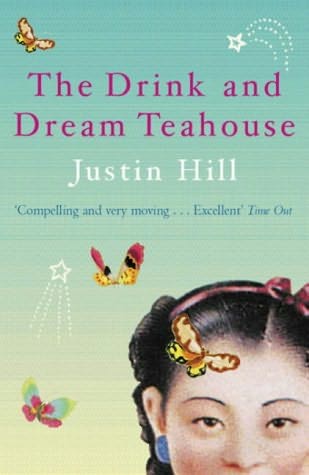
The Drink and Dream Teahouse by Justin Hill


Title:
The Drink and Dream Teahouse

Author: Justin Hill

ISBN: 0753813203 / 0-7538-1320-3 (UK edition)

Publisher: Phoenix (paperback)

Blurb from the back of the book:

When Space Rocket Factory Number Two closes down in the small Chinese town of Shaoyang, it is the signal for the old culture to confront the new. Party Secretary Li cannot cope, and commits suicide, but not before daubing a series of slogans onto sheets of rice paper and hanging them outside his bedroom window (Our Leaders Are Drunk On The Taste Of Corruption reads one; The Party Officials Are Screwing Our Daughters, reads another).Those left behind have to clear up after him: Old Zhu has to keep Party Secretary Li's ashes in the bottom of his wardrobe. On the other side of the courtyard, their aria singing neighbour Madam Fan is temporarily silenced by the tragedy. Meanwhile Old Zhu's son, Da Shan, has returned from the city and fallen in love with not one but two childhood sweethearts.

Review:

After reading "Mao: The Untold Story" by Jung Chang and being so weighed down by Mao's atrocities and the suffering of the Chinese people, I vowed not to touch, for a long,long time, another book with even the slightest reference to the Revolution or Mao. But then, this little gem of a book was pressed into my hands by a bookcrosser in the UK urging me to read it, and I am so glad I did! The gloom has lifted; I am now ready and able to take on any and all books about China again!!!

This is a book that explores the recent history of China through a set of very enjoyable characters, with each character representative of some phase in China's contemporary history. Strictly speaking that should make them stereotypes or symbols, but the author gives them each such unique personalities that they rise aboove being typecast. Also, he fleshes them out so well you almost feel like you could reach out and touch them.

It seems to me, it would be hard to find anywhere in the world, two successive generations (the Mao generation and China's modern generation) that were so different. Not only did they differ idealogically, but on a social-economic level as well, with Communism giving way to Western-like capitalism. This is a story of how these two cultures collide and learn by trial, error and much compromise to live with each other. What doesn't appear to have changed however is the Confucian display of filial piety of the younger towards the older despite the fact that modern ways of thinking constantly clash with tradional stubborn views.

Justin Hill is a wonderful, believable story teller and compels the reader to become an avid, addicted spectator in the everyday lives of his characters. On the surface these characters have very ordinary lives, they don't do anything special, and yet, Hill makes them come alive to us in an extraordinary way. He fills the book with vivid descriptions of their feelings,their conversations, dreams and insecurities; their homes, the market places, the food-- sigh-- especially the food (I was constantly hungry as I read the book!) and in doing so, he shows us a China few tourists will ever see or enjoy.

It amazes me that the author is an Englishman---he captures the cultural sensibilities of the Chinese so vividly, I could have been fooled into thinking that he was a native of China. Even the "Taipei Times" praised the book for its "linguistic naturalness" and suggested that if there are any plans afoot for translating the book into Chinese, "...Taiwan's own energetic publishing houses shouldn't let it (the opportunity) pass..."

So impressed am I with this novel, I can hardly wait to read his next one, "Passing Under Heaven" which is set in 9th century China at the twilight of the Tang Dynasty and their Empire.

Thursday, January 19, 2006

Coming Attraction - Amazon Fishbowl!

Bill Maher of the infamous and now defunct, "Politically Incorrect" show and author of "When you Ride Alone You Ride With Bin Ladin" among many others, has been picked by Amazon.com to host a weekly online talk show called "Amazon Fishbowl With Bill Maher". Bill Maher will record for the show when he's on hiatus from his current show, "Real Time With Bill Maher", on HBO .

According to the New York Times, "...the half-hour show will have a format familiar to any late-night television viewer, with a monologue by Mr. Maher, followed by an interview with an author, a conversation with a filmmaker and a performance by a musician or musical group.

Not surprisingly, the common theme among the guests, who will be chosen by Amazon, is that they will have products for sale through its online site. As guests are talking, Amazon will display buttons that will let viewers instantly buy the book, DVD or CD they are discussing, as well as links to pages with their other works or those by similar artists.

Each segment will also feature a commercial of sorts for United Parcel Service, which is sponsoring the show. In those ads, a celebrity will make a surprise delivery to an Amazon customer. The program will be Webcast live every Thursday night at 11 Eastern Standard Time, beginning June 1..."

" 'Amazon Fishbowl with Bill Maher' has a simple, yet powerful mission -- to help our customers discover new books, films, and music, and to help the creators of these works find new audiences," said Kathy Savitt, Amazon.com Vice President for Strategic Communications, Content, and Initiatives. "We believe that Bill Maher's interviews with some of the world's most renowned and up-and-coming artists and entertainers will offer customers unique insight into the motivations and inspirations behind the books, films, and music they love."

Personally, I applaud Amazon for picking Bill Maher. I love his forthright style and his sense of humor; best of all, he's not afraid to ask tough questions. Ofcourse, this being a show with a non-political agenda, he will be asked to steer clear from politics, still, I have no doubt he will make this an entertaining and enlightening half-hour, so watch out for this one folks!