Showing posts sorted by relevance for query A Golden Age Tahmima Anam. Sort by date Show all posts

Friday, June 15, 2007

A Golden Age by Tahmima Anam

# Hardcover: 288 pages

# Publisher: John Murray UK (8 Mar 2007)

# Genre : Historical Fiction

# Author's Website

#BBC Timeline: Bangladesh


Dear Husband,
I lost our children today.


This evocative opening line is from a book by a young author of Bangladeshi descent, Tahmima Anam, and it is set in Bangladesh against the backdrop of Bangladesh's fight for Independence from Pakistan in 1971, a war in which Nixon, the then President of America supported Pakistan and where India supported the breakaway Bangladesh.

To fully appreciate the novel, here's a little historical background:
When the British left India in 1947, they divided India into two states, India and Pakistan. Unfortunately for Pakistan, 1,500 miles separated West Pakistan from its Eastern Provinces"on either side of India like a pair of horns" and the eastern provinces became known as Bangladesh in 1971 after it secured its Independence from Pakistan in a bloody battle.
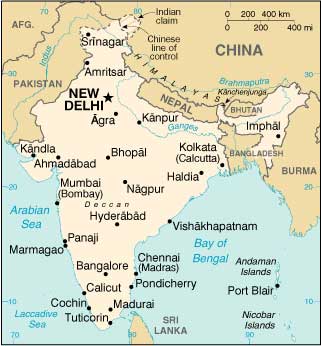


When I first heard about this book on BBC's Radio 4 I did a little jig around the room because, it is not often a Bangladeshi writer is propelled to international fame...the last author to have appeared on the bestseller's list was Monica Ali for "Brick Lane", but whereas "Brick Lane" was essentially an immigrant story, "A Golden Age" explores how the fight for independence affected the lives of normal people living in Bangladesh or East Pakistan as it was called then, their trials, their tribulations and most of all, the sacrifices they had to make in order for their country to be free from Pakistan.

The story centers around one family, the Haques, with smaller stories of the other people who happened to interact with them. Rehana Haque is a plucky, single mother bringing up two teenage children, 19 year old Sohail and 18 year-old Maya. When war breaks out, Sohail and Maya like many young, idealist students of that time, join the Guerilla independence movement and become freedom fighters. Rehana, knowing that she has to make her own contribution, offers her guest house to the Movement. This move on Rehana's part is the ultimate sacrifice because she originally hails from Karachi in West Pakistan. The book follows the lives of these three main characters closely, giving the reader a fictionalized account of what people living through the war might have gone through.


The author who is too young to have her own memories of the war has based her story on what her grandparents and parents told her, creating a wonderful and fairly authentic tale of her nation's birth. The other reason I did a little jig around the room when I heard about this book is because of its subject matter....I was a young girl in Bombay when Bangladesh requested India's help in their fight for independence and I remember so clearly, Pakistan retaliating by dropping bombs on India. Every night, volunteers would walk past our apartment block shouting "lights out, lights out" and my father would stick "black out" paper onto all the windows of the house and shut them tight. Curious little kids that we were, we would run onto the balcony to observe the "fireworks"...little did we know they were bombs in the distance. If any of you have any recollections of the 1971 war Indo-Pak war, do please share.


I consider "A Golden Age" a hugely important book, because, as far as I know, this is the first time the events of 1971 have been set forth in a novel in English and published by an International publishing house. "A Golden Age" has echoes of Shawna Singh Baldwin's "What the Body Remembers" and Chimananda Adichie's "Half of A Yellow Sun", Tahmima Anam is a truly talented writer
. Although Anam traces the Bangladesh war, its losses, tragedies, displacement, sacrifices, sorrows etc. she does so in a way that doesn't overwhelm the reader and for that I am grateful, also, this book, while it may be about the war is also a book about a mother's love for her family and the extent she is willing to go to to keep her family intact.

Though the events of 1971 Bangladesh are half a world and 40 years away, they still have much to teach us and we have so much to learn. Tahmima Anam has written a book every Bangladeshi or indeed every person interested in in this tragic event can be proud of.

If you can, do take a listen to Joan Baez's song about this war. It is called, "Song For Bangladesh" and can be found on YOU TUBE. It made my hair stand on end. Also, George Harrison's "Concert For Bangladesh" is a must-visit!


First Memory:

Radha has tagged me for an earliest memory recall. I have so many memories it is hard to pinpoint what might have been the first one.

It may have been:

a. my grandparents coming to visit us every evening with cookies for us children...

b. or the half-naked beggar-lady that came to our apartment block everyday around lunchtime crying out for something to eat...

c. Oh wait, it could have been me dancing and clapping to my father's cherished LP of the Beatles song, "Oh blah di-oh blah da!"

I am afraid I am totally unable to tell you which one is my earliest memory. Here's hoping Sanjay, Beenzzz, Olivia and anyone else that might like to play fare better than I did!


And finally, here's a fun thing I picked up from Myutopia's blog:

Click here to try it for yourself, it's the Flickr Word Game


L O T U S

Wednesday, November 14, 2007

What the Psychic Told the Pilgrim: A Midlife Misadventure on Spain's Camino de Santiago de Compostela by Jane Christmas

What is the one thing that might make you spend some time browsing through a particular book at a book store? For some it's an interesting cover or the blurb, for others it's the title, but for me, it's usually the first line of the book. I'm such a sucker for good first liners that I decided to collect a few that really stood out for me.

I guess no post on first liners could ever be complete without Tolstoy's line from Anna Karenina:

"All happy families are alike. All unhappy families are unhappy in their own way".

Although this quotation for years has stood unchallenged as a stand-alone statement about the human condition, I read in Id's blog that author Rachel Kadish challenged it in her book "Tolstoy Lied". I can't wait to read the book for myself....

Another great first line often quoted and more often the subject of a joke is from Moby Dick:

"Call me Ishmael"

I really didn't think much about this particular first line until I saw some graffiti in Toronto the other day which read "Call me, Ishmael" !

From Tahmima Anam's "A Golden Age":

"Dear Husband, I lost our children today".

I will confess when I first saw those lines they were so powerful that I knew then and there I was going to be by the book. Although it was an impulsive buy I will never regret it because the book turned out to be an absolutely golden read and is now nominated for a Guardian First Book Award.


Paperback/Sep 2007
Greystone Books
288 pages
Travel/Spain/Memoir/Pilgrimage
$21.95 CAD


The book I am reading currently not only has a great opening line - "Impulse is intuition on crack"- but a great title as well!

"What The Psychic Told the Pilgrim" is Jane Christmas' true adventure story of traveling on foot to Spain's Camino de Santiago de Compostetla to celebrate a milestone - her 50th birthday . This decision to make the pilgrimage that most people take years pondering over was made on a short plane ride that Christmas took. What made Ms. Christmas want to undertake such a challenge? I will tell you...but first, a few words on the Camino de Santigo de Composteta:

The Way of St. James or St. James' Way, often known by its Spanish name, el Camino de Santiago, is the pilgrimage to the Cathedral of Santiago de Compostela in northwestern Spain, where legend has it that the remains of the apostle Saint James the Great, are buried.

A midlife crisis, wanting to get away from a troublesome teenager and the chance to roam free are some of the reasons for wanting to do make this pilgrimage is what Jane Christmas told Macleans magazine. Also, she had always found it difficult to express her Christian faith and it seemed to her that this was one way to do it. She was accompanied by 14 other women. Initially Christmas was happy to have them join her because she thought it might be a kind of Chaucer's "The Canterbury Tales" but turns out the group started splintering into cliques, and there was all this subtle backbiting that morphed into Lord of the Flies on estrogen.


I have to confess to thoroughly enjoying this book! It's a good, funny read with descriptions so lucid and real it almost felt like the author was holding my hand and guiding me through this brutal walk. The 800-kilometer walk with its mountainous, muddy, rocky terrain, its cranky and competitive pilgrims and the crowded and mostly full pilgrim lodges sound quite daunting to me, but its not without its good moments and ofcourse, the wonderful humor of our host together with the history and other excellent background information she provides of the walk, pulls you along quite nicely. "What the Psychic Told the Pilgrim" is however so much more than just the walk...it is a conversation on women's friendships, motherhood, a reflection of one's faith, of pushing oneself to the limit, the celebration of a milestone and a journal of self-discovery.

I
n closing, I will take a virtual walk with this author anytime, but if I ever sign up for a real pilgrimage, especially something as brutal as this in a fit of midlife madness, please hit me!

About the author:

Jane Christmas worked as a newspaper editor for twenty-five years and has written for the Hamilton Spectator, the Globe and Mail, and the National Post. She is the author of The Pelee Project: One Woman’s Escape from Urban Madness. She has three children and lives in Hamilton, Ontario.

Friday, November 02, 2007

Brother, I'm Dying by Edwidge Danticat


Category:
Biography & Autobiography, Haiti, Immigration

Format: Hardcover, 288 pages

On Sale: September 4, 2007

Price: $23.95

Publishers: Random House


I just finished reading Edwidge Danticat's gentle tribute to the two most important men in her life, her father Mira and her uncle Joseph, and I am sad, angry and heartbroken. Read on and you will understand why.


In 1973, constantly hounded by Duvalier's "Tonton Macoutes",
“a battalion of brutal men and women aggressively recruited from the country's urban and rural poor,” Edwidge's parents immigrated to New York, leaving her and her younger brother, Bob, in the care of Uncle Joseph, their father's older brother who was the pastor of a Church in Port-au-Prince. Joseph and his wife Tante Denise were the children's surrogate parents for 8 years and Edwidge grew to love them like her own. They were not the only kids the couple looked after...they also brought up Marie Micheline, the daughter of a Cuban friend who just disappeared one day and never returned, as well Tante Denise's brother's daughter. I mention this so that you get a glimpse of how large-hearted, generous and kind the couple were.

(Danticat has written an essay about the Marie Micheline in the June issue of the New Yorker, you can find it here.)
(The author with her Uncle Joseph and Tante Denise in Haiti 1973)

Although her parents were away, her father's literary presence was always felt by Dandicat who faithfully received a three-paragraph letter from her father. It was those letters which instilled in Danticat a gift for the greatness of story.

In October 2004, there was political upheaval in Haiti. For the first time a UN force was sent to help stabilize Haiti. Rebels seized towns and cities and some entered Uncle Joseph's church compound, threatening his life. Joseph, who was then 81, escaped Haiti in disguise and flew to the US to visit his dying brother (Edwidge's father). However he landed in a deadly detention center in Miami (the Kome detention center) where the immigration officials treated him as an unwelcome refugee (just because he indicated he might like an extension on his visa on account of the trouble in Haiti) rather than the temporary visitor that he was.

To read Danticat's lacerating description of how the officials at the detention center treated her elderly and sick (he had suffered cancer of the throat and could only speak with the aid of a voice box) uncle filled me so much anger, frustration and shame. Unlike Cuban refugees who are processed and released to their families after landing on American soil, Haitians are routinely imprisoned, then deported. Within days of his detention, Uncle Joseph took ill. Accused of faking his illness he was denied his medicines and received minimal medical attention...handcuffed to a hospital bed he died alone because his family was not allowed to visit him.


Along with Danticat I ask, why this discrimination against Haitian immigrants? Why wasn't her uncle who was both, old and sick, not allowed to die with dignity and with his loved ones around him? Why couldn't the world's greatest country have shown more humanity?
Because of the trouble in Haiti it wasn't possible to take Joseph's body back for burial next to his beloved wife Denise, instead he was buried in Queens, New York. When Edwidge's father heard about the burial arrangements he remarked,
"If our country were ever given a chance and allowed to be a country like any other, none of us would live or die here."


Truly, that remark speaks volumes, after all, who really wants to live in exile? Who wants to be a foreigner all of his or her life? But refugees have no choice, it's run away or be killed and it is good for us to realize that in our dealings with them. Danticat’s father died about six months after her uncle from pulmonary fibrosis that had ravaged his body for more than a year. Danticat writes “This is an attempt at recreating a few wondrous and terrible months when their lives and mine intersected in startling ways, forcing me to look forward and back in both celebration and despair. I am writing this only because they can’t.”

"Brother, I'm Dying" is a heartbreaking read. In many ways it is the archetypal American immigrant story -- parents from the home country struggle and sacrifice to afford their children a better life- but it's also uniquely Haitian in the struggles depicted. Do buy yourself a copy!

On October 4, Edwidge Danticat testified before the U.S. Congress' Judiciary Committee's Subcommittee on Immigration, Citizenship, Refugees, Border Security and International Law. Her powerful testimony can be found here


*********
I have been awarded the 'Schmooze Award" by Lalitha or Starry Nights of "Across the Miles" Thank you so much, Starry!


About the award :- This award is for the bloggers who “effortlessly weave their way in and out of the blogosphere, leaving friendly trails and smiles, happily making new friends along the way. They don’t limit their visits to only the rich and successful, but spend some time to say hello to new blogs as well. They are the ones who engage others in meaningful conversations, refusing to let it end at a mere hello - all the while fostering a sense of closeness and friendship.”

In turn, I would love to award it to:

Melissa
Sanjay
Olivia
Radha
Beenzzz
ml
Jenclair
A Reader from India
Booklogged
Happy Reader
Tara
Holly Dolly
Asha
Anali


Everyone on my blogroll deserves this award but I wanted to use this opportunity to express my thanks to these 14 bloggy friends for their frequent visits to my blog despite how busy they are...thank you, it is much appreciated! Please forgive me if you are frequent visitor to my blog and I have forgotten to nominate you...you have my heartfelt thanks too and feel free to use the schmooze award!

******

The Guardian First Book Award Short List (thanks, Sanjay)

I was so happy to see Tahmima Anam's "A Golden Age" on the list. I really enjoyed the novel! Another book that looks like a very worthy read is
"Children of the Revolution by Dinaw Mengestu