Showing posts with label book review. Show all posts

Friday, June 15, 2007

A Golden Age by Tahmima Anam

# Hardcover: 288 pages

# Publisher: John Murray UK (8 Mar 2007)

# Genre : Historical Fiction

# Author's Website

#BBC Timeline: Bangladesh


Dear Husband,
I lost our children today.


This evocative opening line is from a book by a young author of Bangladeshi descent, Tahmima Anam, and it is set in Bangladesh against the backdrop of Bangladesh's fight for Independence from Pakistan in 1971, a war in which Nixon, the then President of America supported Pakistan and where India supported the breakaway Bangladesh.

To fully appreciate the novel, here's a little historical background:
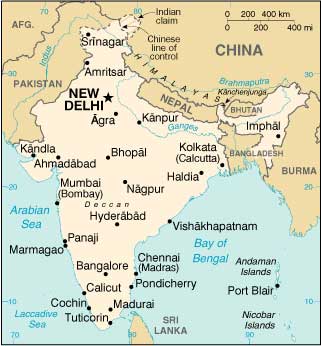
When the British left India in 1947, they divided India into two states, India and Pakistan. Unfortunately for Pakistan, 1,500 miles separated West Pakistan from its Eastern Provinces"on either side of India like a pair of horns" and the eastern provinces became known as Bangladesh in 1971 after it secured its Independence from Pakistan in a bloody battle.


When I first heard about this book on BBC's Radio 4 I did a little jig around the room because, it is not often a Bangladeshi writer is propelled to international fame...the last author to have appeared on the bestseller's list was Monica Ali for "Brick Lane", but whereas "Brick Lane" was essentially an immigrant story, "A Golden Age" explores how the fight for independence affected the lives of normal people living in Bangladesh or East Pakistan as it was called then, their trials, their tribulations and most of all, the sacrifices they had to make in order for their country to be free from Pakistan.

The story centers around one family, the Haques, with smaller stories of the other people who happened to interact with them. Rehana Haque is a plucky, single mother bringing up two teenage children, 19 year old Sohail and 18 year-old Maya. When war breaks out, Sohail and Maya like many young, idealist students of that time, join the Guerilla independence movement and become freedom fighters. Rehana, knowing that she has to make her own contribution, offers her guest house to the Movement. This move on Rehana's part is the ultimate sacrifice because she originally hails from Karachi in West Pakistan. The book follows the lives of these three main characters closely, giving the reader a fictionalized account of what people living through the war might have gone through.


The author who is too young to have her own memories of the war has based her story on what her grandparents and parents told her, creating a wonderful and fairly authentic tale of her nation's birth. The other reason I did a little jig around the room when I heard about this book is because of its subject matter....I was a young girl in Bombay when Bangladesh requested India's help in their fight for independence and I remember so clearly, Pakistan retaliating by dropping bombs on India. Every night, volunteers would walk past our apartment block shouting "lights out, lights out" and my father would stick "black out" paper onto all the windows of the house and shut them tight. Curious little kids that we were, we would run onto the balcony to observe the "fireworks"...little did we know they were bombs in the distance. If any of you have any recollections of the 1971 war Indo-Pak war, do please share.


I consider "A Golden Age" a hugely important book, because, as far as I know, this is the first time the events of 1971 have been set forth in a novel in English and published by an International publishing house. "A Golden Age" has echoes of Shawna Singh Baldwin's "What the Body Remembers" and Chimananda Adichie's "Half of A Yellow Sun", Tahmima Anam is a truly talented writer
. Although Anam traces the Bangladesh war, its losses, tragedies, displacement, sacrifices, sorrows etc. she does so in a way that doesn't overwhelm the reader and for that I am grateful, also, this book, while it may be about the war is also a book about a mother's love for her family and the extent she is willing to go to to keep her family intact.

Though the events of 1971 Bangladesh are half a world and 40 years away, they still have much to teach us and we have so much to learn. Tahmima Anam has written a book every Bangladeshi or indeed every person interested in in this tragic event can be proud of.

If you can, do take a listen to Joan Baez's song about this war. It is called, "Song For Bangladesh" and can be found on YOU TUBE. It made my hair stand on end. Also, George Harrison's "Concert For Bangladesh" is a must-visit!


First Memory:

Radha has tagged me for an earliest memory recall. I have so many memories it is hard to pinpoint what might have been the first one.

It may have been:

a. my grandparents coming to visit us every evening with cookies for us children...

b. or the half-naked beggar-lady that came to our apartment block everyday around lunchtime crying out for something to eat...

c. Oh wait, it could have been me dancing and clapping to my father's cherished LP of the Beatles song, "Oh blah di-oh blah da!"

I am afraid I am totally unable to tell you which one is my earliest memory. Here's hoping Sanjay, Beenzzz, Olivia and anyone else that might like to play fare better than I did!


And finally, here's a fun thing I picked up from Myutopia's blog:

Click here to try it for yourself, it's the Flickr Word Game


L O T U S

Monday, April 23, 2007

Restaurant Tag and "On Chesil Beach" by Ian McEwan

On Chesil Beach by Ian McEwan

Category: Fiction

Format: Hardcover, 176 pages

Publisher: Knopf Canada


The year is 1962, the place, England. Florence is a prim and proper young lady, a violinist from an affluent family who loves Edward, a history graduate from an ordinary background, and is looking forward to marrying him and spending a lifetime together, but there is one small problem...Florence is repulsed at the thought of consumating the marriage!

I'm surprised she didn't think to talk this over with Edward before the wedding, but then again, this was 1962, before the sexual revolution of the '60's and I am sure it wasn't easy for people to discuss these issues then. ALso, she naively believed that loving your partner should be enough to make the marriage work. Edward, not having had too much experience himself had noticed her reticence the few times he tried to touch her, but mistook it for shyness. So they marry and needless to say their honeymoon (on Chesil Beach in Dorset, after which the book was named) was a bit of a disaster.

As I read Ian McEwan's thirteenth book, "On Chesil Beach", I had to wonder what Florence would have done differently today. Is a lack of sexual desire or even a repulsion of the act easy to talk to about now that we're in the 21st century? Are you considered less of a woman if you cannot bring yourself to have intercourse?

"On Chesil Beach" is an intimate look at a couple's marriage..their expectations, their fears and their frustrations with flashbacks to the time they met and were dating...these flashbacks (which I won't go into here) help explain their complex relationship.

Truthfully, I don't know if I liked this nouvella (it is only 176 pages). I think the writing was just a tad too perfect and exacting (every word in its correct place and not an extra, unecessary word) for my taste. The characters, too, were a little too naive, a little too believing, which made them boring. Also, the source of Florence's disgust is never spelled out.

I think this might have made a good short story...although it is a nouvella (176pages) it has the rare distinction of feeling too long and too short at the same time. Boring might be a good word to describe this book but feel free to disagree with me.


Restaurant Tag:

I was tagged by the lovely ml of
Zee's Space to do this restaurant meme, so here goes.

The rules:
1. Add a direct link to your post below the name of the person who tagged you. Include the state and country you’re in.

Nicole Tan (Sydney, Australia) Also, originator of the tag, thanks, Nicole!
velverse (Kuala Lumpur, Malaysia)
LB (San Giovanni in Marignano, Italy)
Selba (Jakarta, Indonesia)
Olivia (London, England)
ML (Utah, USA)
Lotus (Toronto, Canada)

2. List out your top 5 favorite places to eat at your location.

3. Tag 5 other people (preferably from other countries/states) and let them know they’ve been tagged

Chez Cora:

I would like to start with one the childrens' favorite places to eat. Chez Cora is a brunch place with many branches all over Toronto and the GTA. We go there early enough for breakfast and devour their delectable French crepes. My favorite crepe is the one featured here, the "April '89" because it's packed with seasonal fruit in a yummy custard sauce ( I tell them to leave out the chocolate spread) and I usually choose to have it in a gauze- thin buckwheat crepe. The kids love their banana and hazelnut spread crepe, which I will admit is yummy, but terribly sinful!

Lahore Tikka House:

As the name suggests, this is the place to go for Pakistani cuisine. It is located on Gerrard Street, or the hood as we fondly refer to it. I am partial to this inexpensive restaurant not only because of its melt-in-the-mouth kebabs and its delicious, fragrant biriyani, but also because my dad was born in Lahore and every time I tuck in to one of the delicious butter naans, my thoughts go my him and my grandmother in whose house I ate my first teaspoonful of butter chicken with naan. If you ever chance to visit this place, don't forget to order some Lahori Kulfi (kulfi is Indian icecream and the house special has malai (cream) and badam (almonds). I have to put out a grease alert on this particular restaurant because many of their dishes come swimming in oil.


Rose Garden Tea House:

This is the tea house at the Royal Botanical Gardens in Hamilton, Ontario. To be able to sit out on a patio right in the middle of some of the prettiest and most fragrant rose bushes in North America being served "propah" Earl Grey English tea, crustless cucumber sandwiches, hot scones with homemade jam and Devon cream and Victorian jam cake is a little slice of heaven right there. I love "High Tea" and never miss the opportunity to bring friends to the Rose Garden Tea House. If you visit me, I promise to take you there! :)

Boujadi:

The Boujadi restaurant located in the Jewish quarter of Toronto is a MUST try if you enjoy Moroccan food. Heady smells of fruit, cinnamon and mint greet us as we enter the restaurant and soon I am attacked by a hunger so fierce that I'm literally gnawing on my hand till the chicken medina tagine arrives with the kafta couscous. "Medina" refers to the thick spicy onion/tomato sauce imbibed with saffron and coriander. All the crockery and cutlery used here are traditional Morroccan pieces which add to the dining experience. The Mint tea is to die for!


Asian Wok 'n' Roll:

is another family favorite because it serves delectable Hakka Chinese cuisine with a decidely Indian touch. Hakka cuisine is favored by most connossieurs of spicy food because it bursts with pungent flavors and some kickass garlic-chilli spice. Our favorite dish to eat there is the tangra Masala chicken, a lovely fusion of Chinese and Indian spices, and don't forget the aromatic ginger fish, it will leave you wanting more.

In turn, I would love to tag (in alphabetical order):

Bybee of Naked Without Books: Seoul, South Korea

Milan of Zzz's Creative Mess: Serbia

Radha of Petty-Change: Dubai, UAE

Tanabata of In Spring it is the Dawn: Saitama, Japan

Yianna of Karma Canyon: Athens, Greece

Saturday, November 25, 2006

Shalimar The Clown by Salman Rushdie

Category: Fiction

Format: Trade Paperback, 416 pages

Publisher: Vintage Canada

Price: $21.00


Whenever friends or acquaintances learn of my love for South-Asian fiction, I am asked the inevitable question: Have you read Salman Rushdie's "........."(fill in any title you want here) and I am almost embarrassed to have to reply to them in the negative. I have no good reason for not reading an SR, except to say the opportunity never really presented itself until now. A few weeks ago Random House asked if I would like to read "Shalimar the Clown" and I jumped at the chance because not only was it a Rushdie, but also, it was set in Kashmir a place I am drawn to because of its handsome people, beautiful scenery and its precarious position in the world (political pundits say that if a nuclear war does take place, Kashmir is where it will be, after all it is the only place in the world where two nuclear forces are staring down at each other across the Line of Control.)

The book opens with the killing of Max Ophuls, ex US ambassador to India, in Los Angeles on his daughter's doorstep. His death, believed to have been carried out by an Islamic fundmentalist, has no witnesses. In flashbacks we learn that Max Ophuls during his tenure as Ambassdor in India falls in love with a beautiful but uneducated Kashmiri village belle, Boonyi Kaul, who leaves her family to become his mistress...such being the lure of his position and power. A bulk of the story is about what happens to her after she becomes his mistress and what happens to her family, her husband Shalimar the Clown and her native Kashmiri village, a village of theatrical performers and cooks,which she leaves behind. Shalimar, a tightrope walker is understandably devastated when Boonyi leaves with the American ambassador and starts to fall apart, his beloved Kashmir seems to mirror his descent by falling into a madness of its own.

It is not easy for an author to wed large social and political conflicts, such as the conflict over Kashmir, to personal lives, but in "Shalimar The Clown",through the lives,loves and tribulations of the 4 main characters, Boonyi, Shalimar the Clown, the Ambassador Max Ophuls and India, his daughter, Salman Rushdie deftly does just that. Through some great storytelling he acquaints us with the history behind the "rape" of the beautiful valley of Kashmir.

Some history:

When India gained its independence from Britain on 15 August 1947, the Asian sub-continent was partitioned into Hindu-dominated India and the newly-created Muslim state of Pakistan. Kashmir which had a larger Muslim population was expected to join Pakistan, but, it was ruled by a Hindu Maharajah who dithered over the issue because ideally he would have preferred to remain independent of both countries. While he agitated and fussed, Islamic militia from Pakistan began pouring into Kashmir and to counter them the Maharajah had to call on India to send troops to Kashmir, thus began the oppressive military presence and the rise of Islamic fundamentalism in the beautiful and formerly peaceful valley of Kashmir.

Rushdie's book not only turns the spotlight on that bit of history but also explains the genesis and growth of the JKLF ( The Jammu and Kashmir Liberation Front), a Separitist movement,fighting for the Liberation of Kashmir from both India and Pakistan, the growth and ferocity of the Pakistan-based Lashkar-e-Toiba (Soldiers of the Pure - one of the most feared groups fighting against Indian control in Kashmir),the banishment of the Hindu Kashmiri Pundits and so on. Rushdie does this with an impressive storyline, a fascinating cast of characters and a blend of fables, superstitions,folk tales, and legends which keeps the reader engaged in the story...don't you just love a book that educates even while it entertains?

If I do have a critique about the book it is that Rushdie tends to be very wordy and around the middle of the book the sheer weight of what I thought were long-winded passages,took its toll on me. I shut the book only picking it up again once I had agreed with myself to skip any long descriptions or anything I deemed not really contributing to the story. Having said that however, this is a powerful and "essential" story; powerful because strong emotions such as love, revenge and jealousy are the engines that drive the narrative and essential because the plight of the Kashmiri people needs a ear. Sure, the newspapers cover the crisis in Kashmir all the time, but there is nothing quite like a novel with characters a reader can come to care for and love, to really make us interested in a cause.

I'd be happy to read another Salman Rushdie soon, so write in and tell me what Salman Rushdie novels you have read and liked (or disliked) or what you plan on reading.

For a concise reading on the Kashmir dispute, go here

An update (13 Dec): Recently President Musharraf said that Pakistan would give up its claim on Kashmir if India accepts a four-point resolution, including autonomy for the region under a joint government with Indian, Pakistani, and Kashmiri representation...read more about it here

Monday, November 20, 2006

The Inheritance of Loss By Kiran Desai


# Hardcover: 336 pages;

# Publisher: Atlantic Monthly Press (January 9, 2006);

# Language: English


So strong is the link between loss and sadness that I went into Kiran Desai's book "The Inheritance of Loss' fully expecting it to be cloaked in melancholy, however, I was pleasantly surprised to find that it wasn't. Sure, there was sadness, there was loss, but because she balances it with such humor and wisdom you don't come away with a sense of gloom.

Kiran Desai's story is set against the backdrop of the agitation for Gorkhaland (1986)in the north-eastern hills of Darjeeling (India) close to the border with Nepal and revolves around two main characters: 16-year old orphaned Sai and her grandfather, an emibittered, orge-like judge who seems to prefer living in the past . In flashbacks we learn that when he was a young man the judge was sent off to Cambridge by his doting family to study law , but it was a time when people of colour weren't particulary liked in Britain, he was ridiculed for his accent, young girls held their noses as he passed insisting he reeked of curry... this rejection fueled in his soul a shame and a dislike for his heritage, his culture and the colour of his skin.

"...he forgot how to laugh, could barely manage to lift his lips in a smile, and if he ever did, he held his hand over his mouth, because he couldn't bear anyone to see his gums, his teeth.They seemed too private. Infact, he could barely let any of himself peep out of his clothes for fear of giving offence. He began to wash obsessively, concerned he would be accused of smelling. To the end of his life, he would prefer shadow to light, faded days to sunny, for he was suspicious that sunlight might reveal him, in his hideousness, all too clearly." (pg 40)

Other characters in the book include, the wizened old cook and his precious son Biju whom he sent to the US to pursue the American dream; anglophile sisters Noni and Lola; Swiss national Father Booty; drunk uncle Potty and the fascinating Nepali tutor Gyan (also Sai's love interest). The book is set alternately in India and in North America and lovers of language will be fascinated to see how Desai's narration changes to reflect the part of the world her story is in.

Although the story unfolds against the background of the Gorkhaland movement, the book doesn't take political sides. The story is more about the affect this movement had on the people of Kalimpong, how they reacted to it and how it changed their lives. It's about the victims and the survivors. Many books and movies have been made on other Indian separatist movements, like the Sikh's call for a Khalistan or the Kashmir separatist movement, but to my knowledge this is the first book that talks about the call for a Gorkhaland and I am grateful for it shed some light on this cause

I happen to know a lot of blogger friends who are currently reading this book or who have plans to, so I won't reveal too much more, except to say, I really, really enjoyed the book! A big part of the enjoyment came from the fact that booklogged from A Reader's Journal, whose blog I admire so much, sent this to me as part of the BAFAB event and also, reading Kiran Desai at any time means to sit down to an ample literary feast (they don't compare her to Salman Rushdie for nothing). I found her style of writing with its compact paragraphs, lots of exclamation marks, the generous use of capital letters and some breathlessly long sentences to exude a spritliness I am not used to seeing in many books and I love it. I don't know quite how to describe the style except to say it is exhuberant! The narrative, her descriptions and the images they evoke are inspired, take this for instance (about a young boy getting dressed for school)

"...Fed he was, to surfeit. Each day, he was given a tumbler of fresh milk sequined with golden fat. His mother held the tumbler to his lips, lowering it only when empty, so he reemerged like a whale from the sea, heaving for breath. Stomach full of cream, mind full of study, camphor hung in a tiny bag about his neck to divert illness; the entire package was prayed over and thumb-printed red and yellow with tika marks. He was taken to school on the back of his father's bicycle." (pg 58)

In closing, this book has such a range of subjects to discuss - there's globalization, immigration, displacement, the aftermath of colonial rule, love across different cultures, exile, the American dream, just to name a few, but most of all, read it for its expert narration, descriptions and memorable characters . The Chicago Tribune critic predicts "you'll read it almost as Sai read her Bronte, with your heart in your chest, inside the narrative, and the narrative inside you." There is so much more I want to say about this book and hopefully I will get a chance to do so when some of us discuss this book later.

This is the first book from my "Stacks" challenge, four to go!

An Update (15 Dec) : Apparently Kiran Desai is not much loved in Kalimpong. Read about it here

Another update: My friend Sai from Sai Speak has a nice take on the novel. Read it here.

Wednesday, October 18, 2006

Small Island by Andrea Levy

Genre: Fiction

Publisher: Picador ($14)

Author's Website: http://www.andrealevy.co.uk/


(It was a recent review on Nomadica's blog that prompted me to pick this book off my shelf, dust it off and read it)


Winner of the Orange Prize for Fiction, 2004 and the Whitbread Prize the same year, this novel by Andrea Levy takes place in post-war Britain and is told through the point of view of four narrators Hortense Roberts and Gilbert Joseph, Queenie and Bernard Bligh. Hortense and Gilbert are from Jamaica. Gilbert, intensely patriotic to "mother country" England, travels to London and joins England's forces in its war against Germany. Hortense, a cultured school teacher, sensing Gilbert could be her ticket out of poverty-racked Jamaica, decides to marry him and follows him to London several months after the war. Unfortunately, London isn't anything like Hortense imagined. The English, instead of being grateful for the service provided by the Caribbean men in the war against Hitler, resent the new immigrants, or "darkies" as they call them. Hortense, along with Gilbert, find England an extremely racist society, for instance, while walking on the sidewalk they are expected to step onto the road to make way for a white person. They also had to get used to cries of "Golliwog, golliwog" when out on the streets!


Ofcourse, there are readers who have made the observation that perhaps this book deals with racism in reverse, in that the Jamican characters are treated more charitably than the English, and not always deservingly so.

Queenie is a working class Londoner. Although white, she has been a little in love with Africa ever since she encountered an African display at a "British Empire Exhibition" when she was a little girl. During the war, Queenie finds it difficult to meet ends meet and much to the consternation of her racist neighbors, takes Gilbert and Hortense in as lodgers. Bernard is Queenie's husband and he was a soldier in India during the war.

THe story is wonderfully written - warm and funny at times, desperately depressing at others but it is almost always engaging. The three main themes of the book are the migrant experience, racism and integration, and within those themes you learn about the class system which prevailed in Britain at the time, the British Empire's treatment of the inhabitants of its Caribbean and Indian colonies and America's segregation of black GIs . Also, fascinatingly, the novel moves back through the war years, showing the sheer awfulness of war...

While I enjoyed the novel and felt like I learned so much, I will have to admit the author lost me as a reader in the last quarter which is mostly devoted to Bernard's narrative; of all the characters, I like Bernard the least because he comes across as a weak person, arrogant only because he thinks as an Englishman he is superior to the "darkies". Having to read his point of view broke the sweet harmonious relationship I as a reader had with the three other strong characters as they told their intertwining stories.
**********

Also read Lesley's (of Lesley's Book Nook) review for Small Island here