Wednesday, May 25, 2005

Autorickshaw: Four Higher


Four Higher Posted by Hello

I've always been a huge fan of World and Fusion Music, so when Carnatic classical music marries good ol' western Jazz, as it does in Autorickshaw's 'Four Higher' it can't get any better (for me atleast!). Suba Sankaran, the lead singer, is trained both in Jazz and Indian classical music and a lot of the tracks on this album are ragas राग and Vedic chants set to hypnotic pop and jazz beats. The full effect is hypnotic and mesmerizing!!! I especially love the track "Saraswati", which is a prayer to the Hindu Goddess of art, poetry and creative endeavor. Tune in also and listen to Duke Ellington take a rickshaw to his "Caravan", yup, Suba scats with verve to Duke Ellington's "Caravan". Another great track on this album!

The CD comes with an informative booklet and a colorful one too, the latter a takeoff on the exotic art on releases in India, particularly the southern part of the country.

Sunday, May 22, 2005

Beneath The Banyan Tree


Beneath the Banyan tree Posted by Hello

We saw this truly wonderful dance/play today about Anjali, an Indian girl, who has just moved to Toronto from Bangalore in India and the difficulties she has coming to terms with her Indian-ness in her adopted country, Canada. To conquer the aloneness, she feels she conjures up a fantasy world filled with characters from the "Panchatantra" (an Indian Aesop Fables). The performance is a wonderful blend of dance (Indian Bharath Natyam and contemporary), story-telling, puppetry and music.

Although the performance was geared towards children in the 6-11 year age group, my teenager and I enjoyed it just as much. The kids will love the brightly coloured stage props, the dancing animals and the story-telling. In this land of immigrants, Anjali's story has universal appeal.

"Beneath the Banyan Tree" was choreographed by Lata Pada of "Sampradya Dance Creations" fame and we saw it at Toronto's Harborfront "Milk International Children's Festival of the Arts".

Saturday, May 21, 2005

Book Recommendation: Moloka'i by Alan Brennert


Moloka'i by Alan Brennert Posted by Hello

Quick synopsis:

Seven-year-old Rachel Kalama loves her life on the island of Oha'u in idyllic Hawaii and dreams of travel to distant places like her merchant seaman father . . . until she is found to have leprosy. Forcibly removed from her parents by the authorities and sent to the leper's colony on Moloka'i, Rachel finds friendship, love, and eventually health as she grows to adulthood during the first part of the 20th Century.

I would recommend this book!

Why?

First of all, this is historical fiction at its best! Because the author starts his story in 1890 and ends it in 1970, you are walked through a huge chunk of Hawaiian history---the monarchy, the annexation of Hawai'i by the US government, Statehood, World War 2, Pearl Harbor, invention of Sulpha drugs that eventually halt the progression of leprosy. Although the historical facts are plentiful, they are not overpowering, they provide just the right touch of balance to the fictional part of the story...making it real while keeping it from being dry. (Also, The author wrote screenplays for "LA Law," so far from being a dry history lesson, this book sizzles with plot twists, romance and intrigue!)

The story itself is moving (melancholy and yet joyous) and provides you with an insight as to how it must have been for people suffering from leprosy in those days---you see how lonely it is to be an outcast, shut off from society, and yet, these patients bore their lot with dignity, trying to make the best of the rotten hand that fate had dealt them. This was particularly meaningful to me as having grown up in India, lepers and leprosy are not alien to me. As a child I would see leprosy patients all the time, and like the children in Hawai'i, I, too, was told to stay away from them and not to touch them lest I contract it myself. How ignorant we were. How much my heart bleeds for the patients I may have inadvertently offended.

Last, but certainly, not least, the author does such a lovely job of capturing the essence of the land in which it was set. As you read the novel, you can almost smell the briny Hawai'ian air with its faint sweet fragrance of plumeria, you can see the beautiful volcanic mountains in the distance, you can hear the sweet little Hawai'ian children calling out to their friends. The book is sprinkled liberally with charming Hawai'ian words and phrases which add to the Hawaiian experience. This book is a celebration of Hawai'i and in particular, the group of leprosy patients (or Hansen's Disease as it was later referred to) who triumphed over adversity and managed to make decent lives for themselves on the island.

An unforgettable read, truly.

Links you might be interested in:

Moloka'i, Hawai'i

Thursday, May 19, 2005

Movie Review: Maria Full of Grace


Maria Full of Grace Posted by Hello

Maria Full of Grace is a movie about three girls who travel from Colombia to New Jersey in the USA as mules carrying about 50 pellets of cocaine between them. Drug carriers were known as mules because when applied to an animal the term "mule" refers to a beast of burden - a slow, uncomplaining, dull creature whose sole asset is that it can transport large amounts of cargo without drawing attention to itself. When applied to humans, mules were supposed to do likewise, carry a large amount of drugs all the while looking so unlike someone that would deal with drugs thus remaining undetected by the US customs and security. For this purpose, many a time, young innocent-looking peasant women would be chosen as mules. Many of them would choose to do the work because it meant alleviating their families from dire poverty. Few went for the adventure.

This movie, directed by Joshua Marston (his debut) was brilliant because it took you behind the scenes of what happens as a drug mule prepares to go on his or her journey. Right from the interview of a mule, to the preparation of the drug pellets, to the process of how the mule ingests them, the airline trip, the the encounter with customs, the collection of the pellets on the other side, everything is shown in meticulous detail, opening our eyes to the terrible risks involved in such a murky business.

Catalina Sandino Moreno who plays plays Maria, a 17-year old Colombian girl who becomes a drug mule in order to support her family and unborn baby, gives a brilliant,realistic, moving performance that will stay with the viewer for a long time.

The film's title, taken from the Catholic "Hail Mary" prayer and poster imagery (a young woman receiving communion, with the wafer being replaced by a pellet) might lead a potential viewer to expect 'Maria Full of Grace' to be overflowing with catholic symbolism, but it isn't, although the setting, Colombia, happens to be a highly religious society. The movie is a political (although, not overtly so) take on the Colombian drug culture. Maria, and the two other mules are presented as victims, but not as unwilling participants. Their plight is tragic no doubt, and they have been preyed upon by greedy men, but they know the risks and have entered into this underworld willingly. Like all who make such a pact, they are shocked when payment is exacted so quickly and ruthlessly.

I would put this movie in a "definitely worth watching" category.

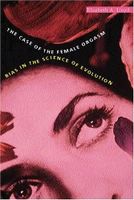
Book Discussion: The Case of the Female Orgasm, by Dr. Elisabeth Lloyd


Bias in the Science of Evolution Posted by Hello

A new book by Dr. Elisabeth A. Lloyd (Indiana University philosopher), titled "The Case of the Female Orgasm", debates that the female orgasm has any role in evolution. What she does is to take the 21 existing explanations or theories supporting the female orgasm as having an evolutionary function and knocks them dead one by one.

From the NYT:

According to Dr. Lloyd the most convincing theory is one put forward in 1979 by Dr. Donald Symons, an anthropologist.

That theory holds that female orgasms are simply artifacts - a byproduct of the parallel development of male and female embryos in the first eight or nine weeks of life.

In that early period, the nerve and tissue pathways are laid down for various reflexes, including the orgasm, Dr. Lloyd said. As development progresses, male hormones saturate the embryo, and sexuality is defined.

In boys, the penis develops, along with the potential to have orgasms and ejaculate, while "females get the nerve pathways for orgasm by initially having the same body plan."

Nipples in men are similarly vestigial, Dr. Lloyd pointed out. While nipples in woman serve a purpose, male nipples appear to be simply left over from the initial stage of embryonic development.

The female orgasm, she said, "is for fun."

Wow, any wonder why people are attacking Darwin and his theory of evolution --- women have sex for fun!! Who would have thought so? ;)

However, the trouble I have with such a theory is this: If women's orgasms have no role to play in evolution, isn't it possible that by the process of natural selection women might learn to do away with it all together?

If this interests you, read the rest of the article here

The article has all sorts of stats about how often women experience orgasm via sexual intercourse (25% "unassisted"),it also includes some conflicting opinions, one from a doctor by the name of (and I'm not kidding) Dr. John Alcock who said, that a woman might use orgasm "as an unconscious way to evaluate the quality of the male," his genetic fitness and, thus, how suitable he would be as a father for her offspring. "Under those circumstances, you wouldn't expect her to have it every time," Dr. Alcock said.

And, oh, look, here's another interesting point from the article:

Among the theories that Dr. Lloyd addresses in her book is one proposed in 1993, by Dr. R. Robin Baker and Dr. Mark A. Bellis, at Manchester University in England. In two papers published in the journal Animal Behaviour, they argued that female orgasm was a way of manipulating the retention of sperm by creating suction in the uterus. When a woman has an orgasm from one minute before the man ejaculates to 45 minutes after, she retains more sperm, they said.

Furthermore, they asserted, when a woman has intercourse with a man other than her regular sexual partner, she is more likely to have an orgasm in that prime time span and thus retain more sperm, presumably making conception more likely. They postulated that women seek other partners in an effort to obtain better genes for their offspring.

Does this mean that a woman is more likely to become pregnant if she makes out with someone other than her regular sexual partner? Hmmm.

See what Slate had to say about the book.

Wednesday, May 18, 2005

Shwaas: India's entry for the Oscars 2005


Shwaas Posted by Hello

A good friend of mine sent me this movie a couple of weeks ago. I was curious about the movie mostly because I knew that this was India's entry for the Oscars in the Foreign Film Category, but 15 mins into the movie I was hooked because I could see that there was a thoughtful, sensitive and heartwarming story about to unfold. This particular copy did have sub-titles (the movie is in Marathi which I don't understand), but truthfully, I didn't feel the need for subtitles because the acting, the expressions, the way the story was told made use of a universal language.

The movie is based on a true story. A 7-year old boy from the village is diagnosed with a rare form of retinal cancer and the doctor decrees that in order to save his life the boy has to have an eye operation which would render him blind. When the operation is postponed by a day, the little boy's grandfather who brought him to the city from the village for the operation, takes him on a day trip filling his sight with fairs, markets, temples, football games and everything that the boy would never see again.

I enjoyed the movie because although the story was of such a serious nature, the director didn't turn it into a melodrama; it was a story of human relationships especially the beautiful and loving relationship of the grandfather with his grandson.

Go here for the official Shwaas webpage.

Monday, May 16, 2005

Kahani, which means story in Hindi


Kahani Posted by Hello

I am so excited to announce a new South Asian literary magazine for-------children!!!

"Kahani is a bimonthly literary magazine dedicated to empowering, educating and entertaining children of South Asian descent living in North America. It is an alternative publication that reflects their unique life experiences not found in mainstream literature. Created especially for children in elementary school, Kahani is proud to be the first magazine of its kind".

Do check them out here